01 · Direct answer.
India and Sri Lanka supply most of the world's coir pith and coir fibre — together, roughly 90% of what is traded internationally.[1] Brazil is a smaller, Atlantic-side origin: no Suez Canal exposure, a published 6-day transit from the Port of Pecém to Algeciras and to New York, and a September-to-February dry season in Northeast Brazil that runs counter to the South Asian monsoon.[2][3] Brazil does not compete with Asian origins on FOB price. It competes on route diversification, calendar diversification, and a shorter, lower-risk crossing to the Atlantic basin.
02 · Route and transit.
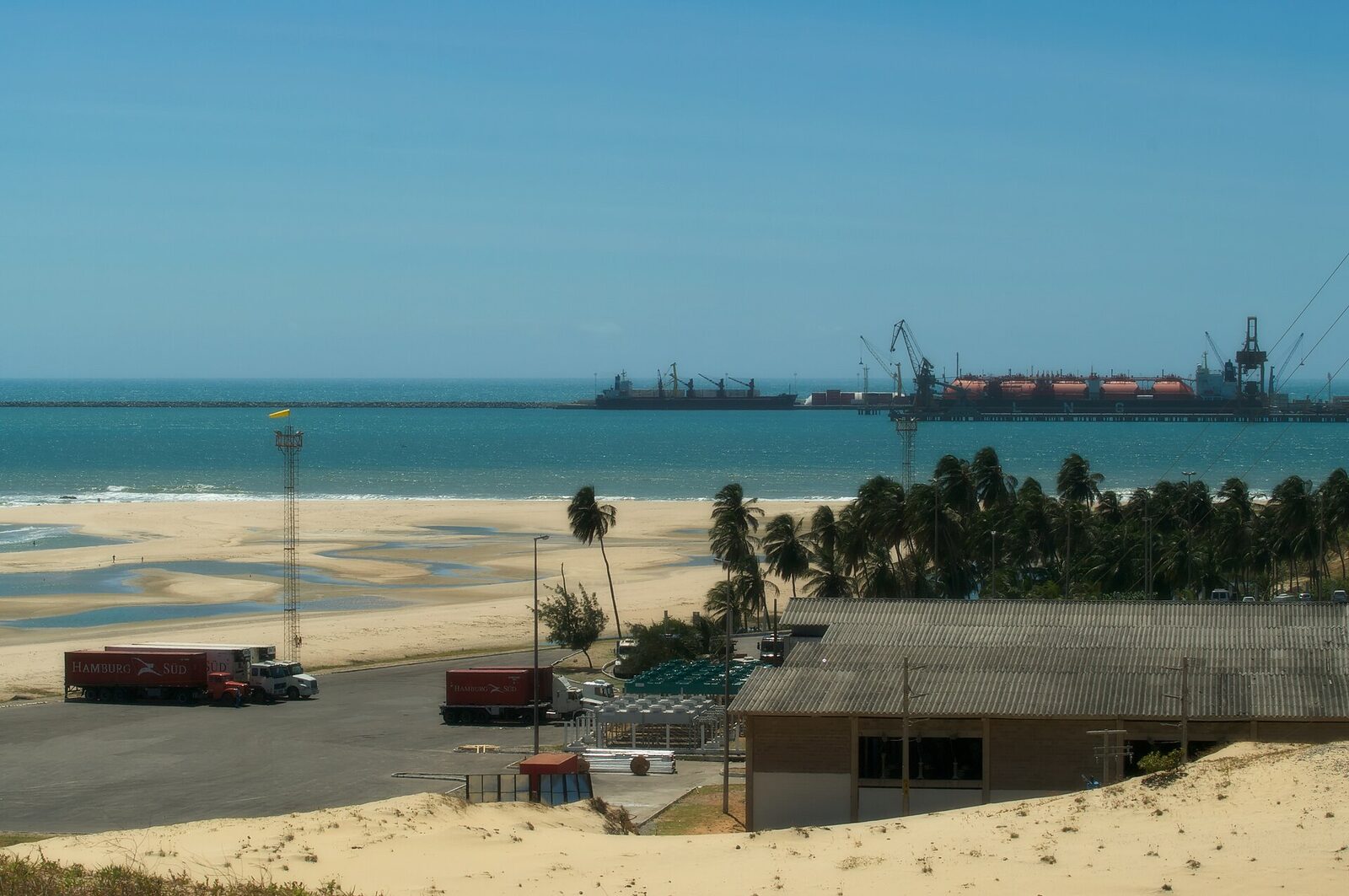
From the Port of Pecém, Ceará — the closest major Brazilian container port to Europe — APM Terminals publishes direct transit of 6 days to Algeciras, Spain and 6 days to New York.[2] Onward connections to Rotterdam, Sines and Rostock in Europe are cited as "under three weeks" total; Pecém-to-US-East-Coast is estimated at 12-18 days.[4] Pecém handled a record 706,524 TEU in 2025, up 38% year-on-year in the first half, and its capacity is expanding from 650,000 to 850,000 TEU.[2]
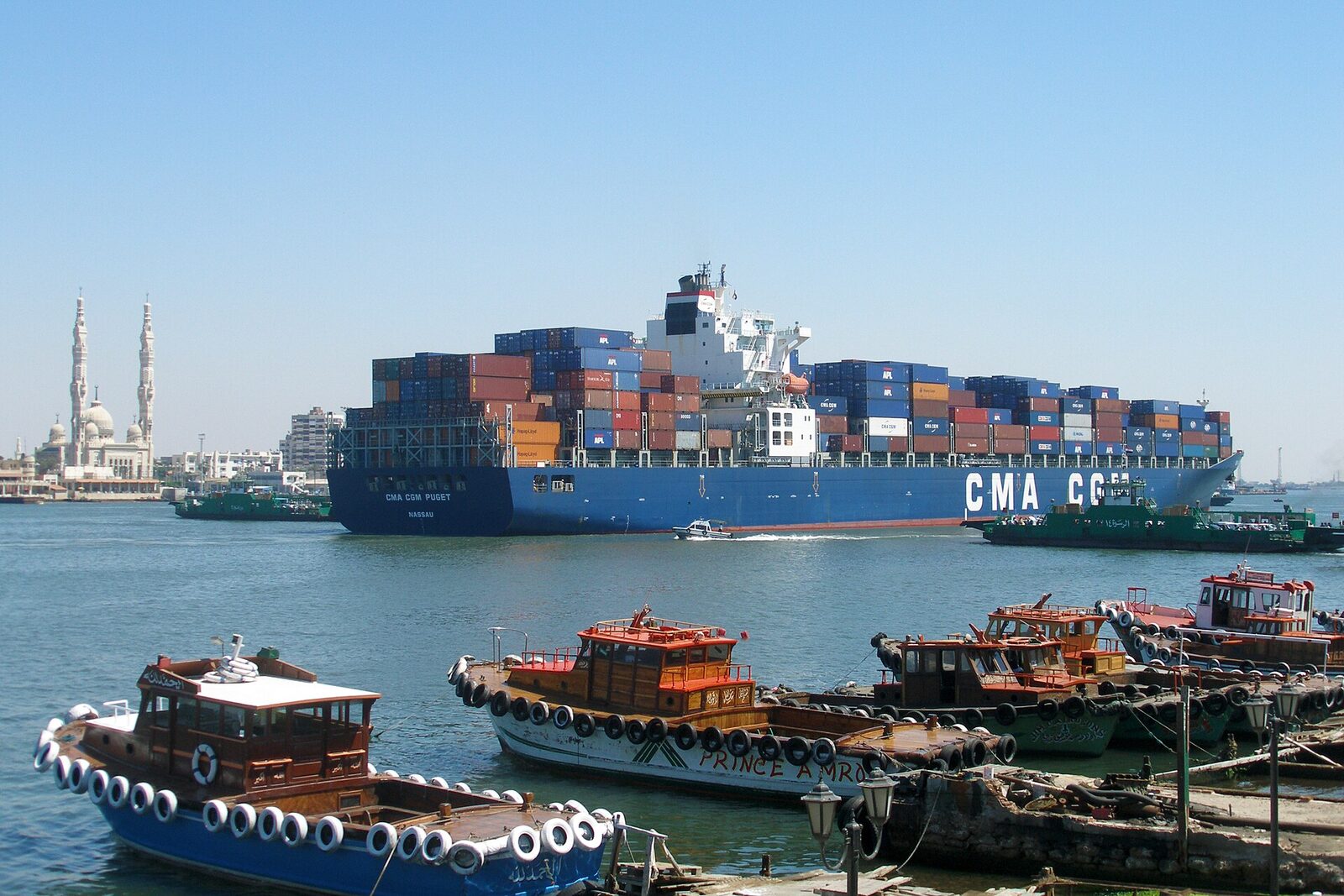
From India or Sri Lanka to Europe, the standard routing goes through the Suez Canal. Since late 2023, Houthi attacks in the Red Sea have pushed much of Asia-Europe container traffic onto a Cape of Good Hope diversion instead, adding roughly 10-14 days each way.[5] As of September 2026, the return to Suez is partial and service-by-service: some loops have resumed the canal "if security allows," but most India-Europe services still route via the Cape, and the industry expects diversions to continue at least through 2027.[5] A real freight quote from April 2026 recorded a 52-day transit from India to Rotterdam on a Cape routing; when a service does route through Suez, India-to-Mersin (Turkey) runs 20-27 days.[6][7]
| Route | Transit | Notes |
|---|---|---|
| Pecém (BR) → Algeciras (ES) | 6 days | APM Terminals published transit |
| Pecém (BR) → New York (US) | 6 days | APM Terminals published transit |
| Pecém (BR) → Rotterdam (NL) | "under 3 weeks" | Onward connection via Europe hub |
| Pecém (BR) → US East Coast | 12-18 days | Freight-index estimate, Sep 2026 |
| India → Rotterdam (Cape routing) | 52 days (actual) | Freight quote, Apr 2026 |
| India → Mersin (TR), via Suez | 20-27 days | Freight research |
| India → Mersin (TR), via Cape | 35+ days | Freight research |
| Cape of Good Hope diversion penalty | +10-14 days each way | Industry logistics reporting, 2025-26 |
Ocean freight prices are excluded from this table by policy; contact Carve directly for a current FOB quote.
03 · Seasonality.
India and Sri Lanka's southwest monsoon slows sun-drying and husk processing, in a disruption window industry reporting places roughly from June through February; a stronger monsoon season is cited as capable of "slowing natural drying activity, reducing processing volumes."[8] Northeast Brazil's dry season runs September through February — the same months when Indian and Sri Lankan supply is most exposed to monsoon disruption, and when spring demand in the US, Canada and Europe typically ramps up. This makes Brazilian supply counter-seasonal to the main Asian supply risk window, though this positioning is drawn from internal analysis rather than a single third-party seasonality study.[9]
04 · Feedstock and process.
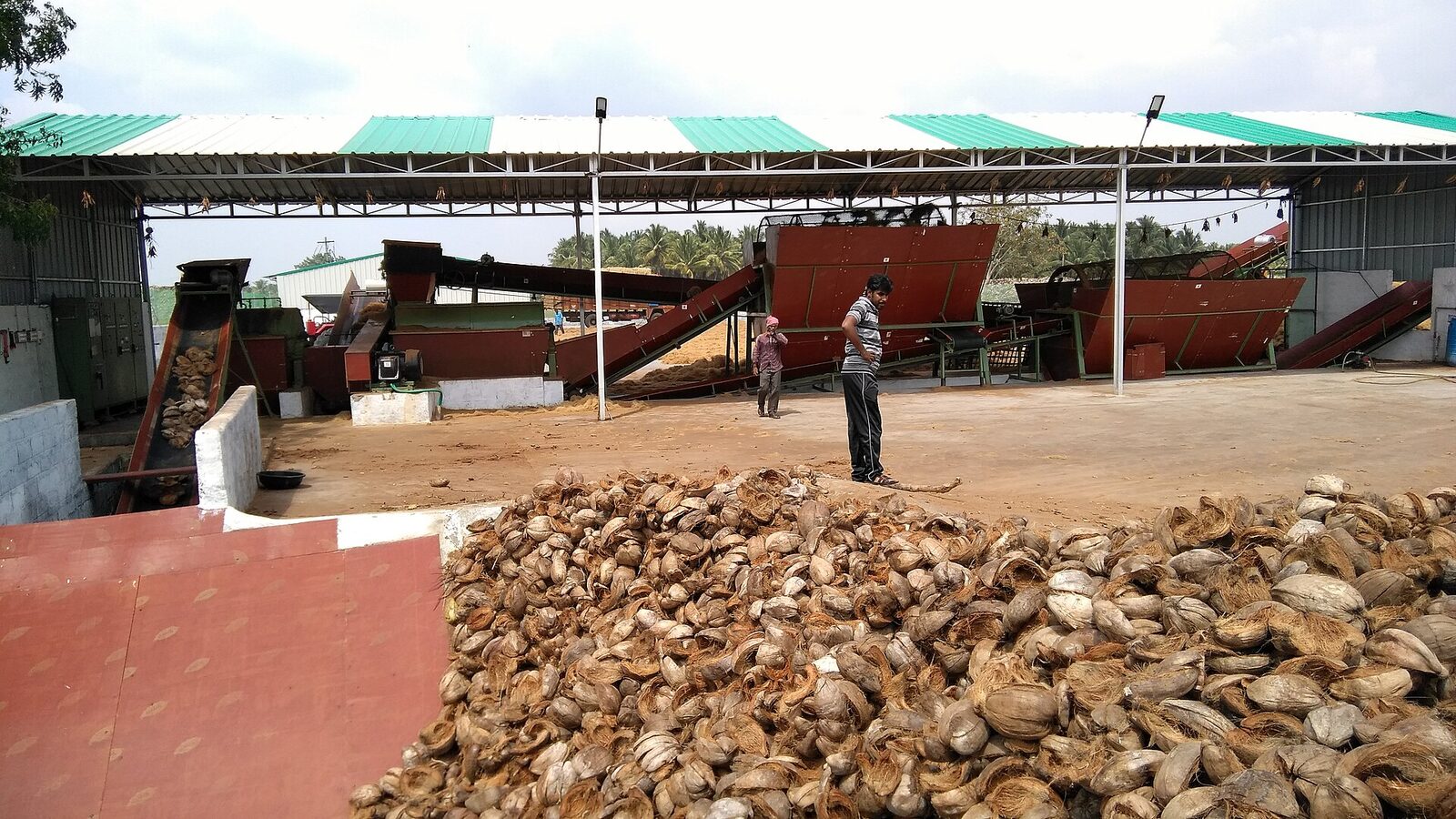
Carve processes mature dry coconut husk (Cocos nucifera) from Ceará, Brazil's largest coconut-producing state. Unlike the retting process common in parts of India and Sri Lanka — where husk is soaked for months in ponds before fibre extraction — Brazilian dry husk is removed from the nut dry and typically stored outdoors for weeks or months, where rain naturally leaches out part of the soluble salts before processing.[10] Raw dry-husk electrical conductivity (EC, 1:5 extract) spans 0.4 to 6.0 mS/cm in the literature, and pH runs 4.9 to 6.0.[10]
Carve's pith is offered in three EC bands, each measured per lot: Natural (0.8-1.5 mS/cm), Washed Standard (0.4-0.8) and Washed Low (up to 0.4), with the washing level agreed in the sales contract.[11] Asian producers have decades of scale and, in several cases, certified RHP buffered products already established with European buyers; Brazil's washed grades are newer to the export market and are made to the EC level a buyer specifies, verified on every lot rather than sold against a fixed brand-level certification today.
05 · Vessel availability and risk.
"Vessel shortages disrupt cocopeat exports from India and Sri Lanka," FreshPlaza reported in 2026, describing a shortage that pushed up container costs and caused rolled bookings out of Sri Lanka specifically, a situation still active as of September 2026.[12] Red Sea rerouting has also produced reported surcharges on some Asia-Europe sailings.[5] Brazil's Atlantic crossing to Europe and North America carries no equivalent geopolitical chokepoint exposure. This is not a claim that Brazilian freight is cheaper — the freight differential is modest — it is a claim about route risk and schedule reliability during the months when Asian supply is most exposed to both monsoon and vessel-availability disruption.
"Vessel shortages disrupt cocopeat exports from India and Sri Lanka."FreshPlaza, 2026
06 · Specification checklist for importers.
Whichever origin a buyer chooses, the same specification items resolve most disputes before they start:
| Item | What to specify |
|---|---|
| Electrical conductivity (EC) | State the band (1:5 extract, mS/cm) and the extraction method; require it measured and reported per lot, not estimated |
| Moisture | State whether wet-basis or dry-basis — the difference between the two conventions can run several percentage points on the same lot |
| Expansion | Fine-grade coir expands at roughly 15 L/kg; ask for the figure on the specific grade quoted |
| Compression ratio | Export blocks commonly compress at 5:1; a 40HC container of 5:1 blocks holds approximately 20-26 tonnes |
| Bulk density (loose) | Carve's pith runs approximately 90-95 kg/m³ loose at 15-20% moisture; ask for the measured value per lot |
| Lot traceability | Request a per-lot report (EC, pH, moisture, density) rather than a single specification sheet covering all production |
Expansion and durability figures per Romero (2025), source 13; density per EMBRAPA COT-226-19 and Manickam & Suresh (2011), source 10.
See Coir Pith for Carve's full specification and Import Coir from Brazil for packaging, documentation and route detail from Pecém.
07 · Frequently asked questions.
Where does most of the world's coir come from?
India and Sri Lanka supply roughly 90% of the world's traded coir fibre and coir pith. India alone exported 1.34 million tonnes of coir and coir products worth US$434 million to 121 countries in fiscal year 2024-25, with coir pith accounting for about 60% of that value.
Is Brazilian coir cheaper than Asian coir?
Not on FOB price. Brazil is a smaller, higher-cost origin than India or Sri Lanka. What Brazil offers instead is route and calendar diversification: an Atlantic crossing with no Suez Canal exposure, published 6-day transits from Pecém to Algeciras and to New York, and a Sep-Feb dry season that runs opposite the South Asian monsoon that disrupts Indian and Sri Lankan shipments.
How long does it take to ship coir from Brazil to Europe?
From the Port of Pecém, published transit to Algeciras, Spain is 6 days (APM Terminals). Onward routing to Rotterdam is generally cited as under three weeks. This compares with a 52-day actual transit recorded from India to Rotterdam via the Cape of Good Hope in April 2026, versus 20-27 days when a service can route through Suez.
Why do coir shipments from India and Sri Lanka get delayed?
Two recurring causes: the monsoon season, which slows sun-drying and husk processing in India and Sri Lanka roughly June through February, and vessel shortages on the Asia-Europe corridor, which FreshPlaza reported in 2026 as actively disrupting cocopeat exports from both countries. Red Sea rerouting via the Cape of Good Hope adds another 10-14 days to many Asia-Europe sailings.
What EC should I specify when importing coco peat?
State the electrical conductivity band you need (1:5 extract, mS/cm) explicitly, plus the moisture basis (wet or dry) and expansion in liters per kilogram. Carve's washed grades are Natural (0.8-1.5 mS/cm), Washed Standard (0.4-0.8) and Washed Low (up to 0.4), with the washing level set in the sales contract and EC measured on every lot before dispatch.
08 · Sources.
- IBEF, "Coir Industry in India," FY2024-25 — ibef.org; Sri Lanka Export Development Board, 2024 Coconut Industry Report via export-lanka.com — export-lanka.com; industry reporting on India+Sri Lanka combined share of global coir production.
- APM Terminals Pecém, shipping lines and published transit times — apmterminals.com/en/pecem; Government of Ceará/CIPP, Feb 24, 2026, Pecém 2025 throughput (706,524 TEU, record) — ceara.gov.br.
- Internal seasonality analysis referencing FUNCEME (Ceará rainy-season calendar) and IMD (Indian monsoon calendar).
- Freight-index research, Suaid Global Freight Index, September 2026; UNIS, Pecém direct connections — unisco.com.
- SEKO Logistics, Asia-Europe trade lane guide — sekologistics.com; Zencargo, Red Sea reopening 2026 — zencargo.com; Euronews, Aug 14 2026, "Maersk returns another Asia-Europe service through Suez, but wider return remains distant" — euronews.com.
- Flexport freight quote, April 2026, India-to-Rotterdam actual transit (Cape routing).
- Freight and shipping research, India-to-Mersin (Turkey) transit via Suez and via Cape of Good Hope, 2026.
- FreshPlaza, "Vessel shortages disrupt cocopeat exports from India and Sri Lanka," 2026 — freshplaza.com.
- Internal positioning analysis, counter-seasonal supply window.
- EMBRAPA Tabuleiros Costeiros, Comunicado Técnico 226: dry coconut husk EC range, pH, porosity, water retention; Manickam & Suresh (2011), IJEST 3(4), bulk-density regression by moisture and particle size.
- Carve public product specification: EC bands by washing grade.
- FreshPlaza (as source 12); industry reporting on Red Sea surcharges, 2025-26.
- Adalberto Romero webinar, Science Fetti / El Semillero, 2025: fine-grade coir expansion (15 L/kg), compression ratios, durability by grade.