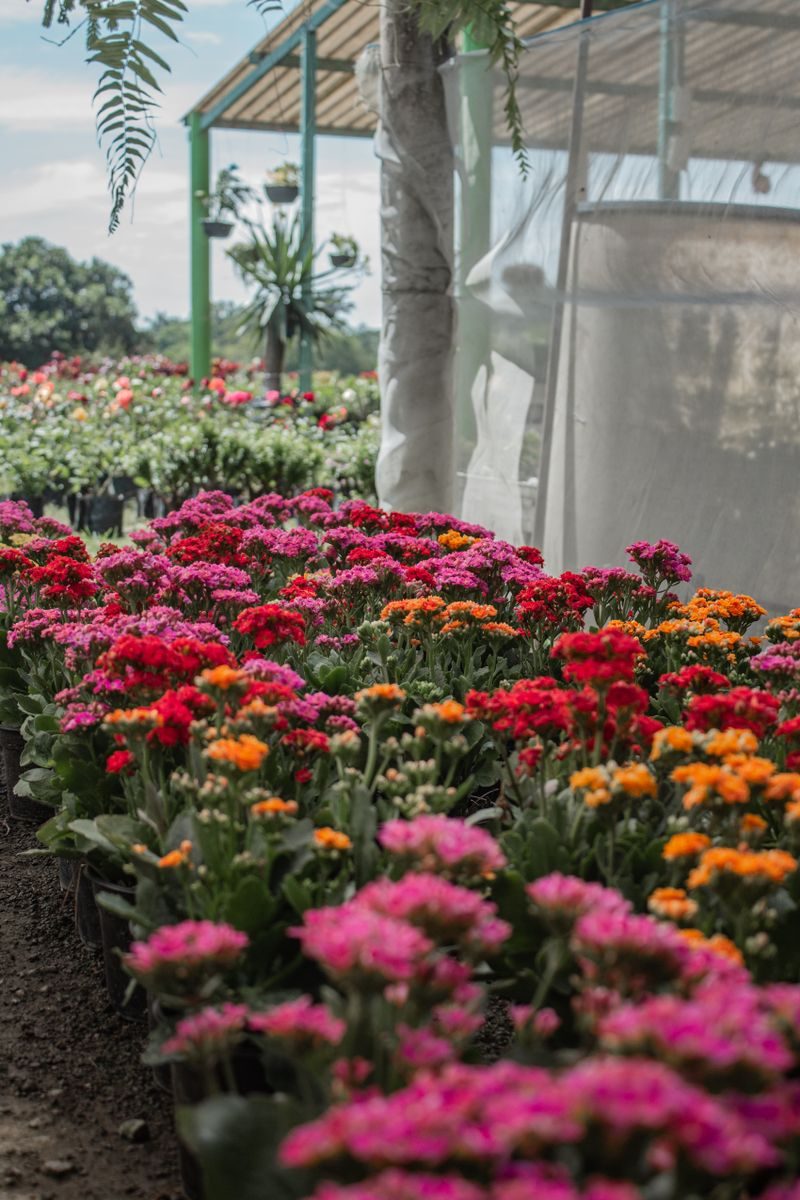
Coir Mix Substrate for Ornamental Pots
A blend of coir pith and coir fiber in adjustable proportions gives ornamental pots the water retention of pith with the structural aeration of fiber, preventing the compaction that pure pith can develop in larger containers over multi-month pot cycles. Carve's coir mix is produced from dry mature coconut husk, never retted, with EC measured per lot at 0.8–1.5 mS/cm (1:5 extract) for natural grade; washed grade is available for lower-EC requirements.
The physical case for mixing pith and fiber in pots
Pure coir pith is an excellent water-retention medium — holding approximately 500 ml per liter of substrate — but in larger ornamental containers (3 L and above), the fine particle structure can settle and compact over time, reducing air-filled porosity and increasing the risk of waterlogging in the lower pot zone. Adding coir fiber creates a rigid scaffold of channels that resist compression under the weight of wet substrate, maintaining air-filled porosity above 15% throughout the pot cycle even as the pith fraction absorbs and releases water around it.
The result is a substrate with intermediate water retention (~400 ml/L) and significantly better drainage than pure pith, which is the physical profile most ornamental container programs target: enough moisture to reduce irrigation frequency, but enough air space to prevent root hypoxia in species sensitive to wet feet. The pith-to-fiber ratio is adjustable — 70:30 is a common starting point, with higher fiber fractions for larger containers or species prone to root rot, and higher pith fractions for smaller pots or arid greenhouse conditions where retention is the priority.
Unlike Asian coir mixes that may combine pith and fiber from retted husks — where both fractions carry elevated sodium and chloride from the retting water — Carve's mix uses components from the same dry-husk stream, giving the blend a lower and more predictable salt baseline regardless of the ratio chosen.
Technical specification
Values are measured and printed per lot; the QR code on every bag links to the full lab report.
| Parameter | Carve Coir Mix — Ornamental Pots |
|---|---|
| Composition | Blend of coir pith + coir fiber, proportion adjustable per client (default ~70:30 pith:fiber by volume) |
| Raw material | Mesocarpo of dry mature coconut husk (Cocos nucifera L.), Ceará coast, dry-farmed groves, never retted |
| Process | Mechanical shredding, screening and blending; no chemical additives |
| Water retention | ~400 ml/L (between pure pith ~500 ml/L and pure fiber ~300 ml/L, varies with blend ratio) |
| Total porosity | >94% |
| EC (1:5 v/v) | Natural grade: 0.8–1.5 mS/cm; Washed grade available for lower-EC requirements. Measured per lot. |
| pH | Reported per lot; typical range 5.5–6.5 |
| Moisture at dispatch | Guaranteed ≤18% |
| Bulk density | ~90–110 kg/m³ (varies with blend ratio and moisture) |
| Organic matter | ≥85% |
| Packaging | 100 L woven bag, lot QR code linking to lab report + origin data |
Control per lot
Every lot is analysed before dispatch. EC, pH and moisture are printed on the bag and linked via QR code to the full bench-test report.
Step by step
- Confirm the pith-to-fiber ratio for your container size: more fiber for larger pots (5 L+) where compaction risk is higher; more pith for smaller pots where retention is the priority.
- Check the printed lot EC against your crop tolerance. Natural grade (0.8–1.5 mS/cm) is suitable for most ornamental species; request Washed grade if your program targets lower conductivity.
- Pre-wet the mix thoroughly before potting. Dry coir pith resists initial wetting; ensure even moisture throughout the blend to avoid dry pockets against the container wall.
- Fill containers to standard density. The fiber fraction provides structural support, so moderate compaction during potting is acceptable and helps stabilize the plant.
- Irrigate on a schedule calibrated to the mix's intermediate retention (~400 ml/L). The blend dries slightly faster than pure pith, reducing the risk of overwatering in greenhouse conditions.
- Fertigate per crop program. The per-lot EC report lets you dose nutrients with confidence, accounting for the substrate's known starting conductivity.
- Monitor root development at the first repotting window. Healthy white roots distributed through both pith and fiber zones confirm the blend ratio is working for your species and container size.
The data behind this application
- ~400 ml/Lwater retention of the default coir mix blend, between pure pith (~500) and pure fiber (~300).
- >94%total porosity, providing both air and water channels throughout the pot profile.
- 0.8–1.5 mS/cmEC range (1:5) for natural-grade coir mix — the baseline from dry, never-retted husk without added retting salts.
- 90–110 kg/m³bulk density range, lightweight enough for hanging baskets and elevated container gardens.
- ≤18%moisture at dispatch, keeping shipping weight low and shelf life stable.
- 100 Lwoven bag with per-lot QR code linking to filmed bench test and origin data.
What this product does not do
Coir mix is a physical blend, not a chemically buffered product. The natural-grade EC of 0.8–1.5 mS/cm (1:5) is suitable for the majority of ornamental species, but the most salt-sensitive crops — professional orchid production in particular — may require either the washed grade or a dedicated low-EC substrate. The fiber fraction improves aeration and resists compaction, but does not add the rigid structure that bark or perlite provides; programs requiring very high air-filled porosity (above 25%) for epiphytic species should consider adding structural amendments. The blend ratio affects performance — there is no single universal mix for all pot sizes and species, so growers should test their specific combination before scaling production runs. Coir mix is not a fertilizer: it provides physical structure and water management, and all nutrient delivery must come through the grower's fertigation program.
Carve's product for this application
Carve's Coir Mix for ornamental pots blends coir pith and coir fiber from the same dry-husk feedstock — mature coconut husks from irrigated groves on the Ceará coast, Brazil, mechanically processed in Paraipaba-CE without retting or chemical treatment. This is a materially different starting point from most Asian coir mixes, where both the pith and fiber fractions originate from husks soaked in brackish or tidal water to loosen fiber for rope-making. That retting process loads sodium and chloride into the husk tissue itself, meaning both components of an Asian coir mix carry elevated baseline salts — the literature documents raw retted coir reaching EC values up to 11.25 mS/cm (1:5). Carve's never-retted origin means the mix starts from the coconut's inherent mineral content only, with natural-grade EC at 0.8–1.5 mS/cm before any washing step. The proportion of pith to fiber is adjustable per order, and every 100 L bag ships with a lot QR code linking to the bench-test report showing EC, pH, moisture and processing date. For related products see Coir Pith, Coir Fiber and Coir Mix; for export logistics see Import Coir from Brazil.
References
- [1] Carve internal specification — coir mix composition, adjustable pith:fiber ratio, per-lot EC/pH testing, 100 L bag packaging.
- [2] Raviv, M. & Lieth, J.H. (eds.), Soilless Culture: Theory and Practice, 2nd ed. — coir pith water-holding capacity, total porosity across coir origins.
- [3] Carve internal composition analysis (EMBRAPA Tabela 1, Tabuleiros Costeiros 2005) — inherent mineral content of dry coconut husk, theoretical EC range.
- [4] Raviv Table 8.6, 2nd ed., p. 318, citing Ross et al. 2010/2012 — raw retted coir EC ranges up to 11.25 dS/m.
- [5] Carve internal research — coir mix water retention interpolation between pith and fiber fractions, density range.
Frequently asked questions
What is coir mix and how does it differ from pure coir pith?
Coir mix is a blend of coir pith (the fine, spongy fraction) and coir fiber (the coarser structural fraction), combined in adjustable proportions. Unlike pure pith, which maximizes water retention but can compact in larger pots, the fiber component creates stable air channels that persist throughout the pot cycle, improving drainage and root aeration.
What pith-to-fiber ratio should I use for ornamental pots?
A common starting point is 70:30 pith-to-fiber by volume, which balances water retention with aeration. Larger containers or species prone to root rot benefit from more fiber (60:40 or even 50:50), while smaller pots with fast-drying conditions may use higher pith ratios. Carve can adjust the blend to your specification.
Why does Carve's dry-husk origin matter for coir mix quality?
Most Asian coir originates from husks retted (soaked) in brackish or tidal water to loosen fiber for rope-making, which loads sodium and chloride into both the pith and fiber fractions. Carve's husks are dry-farmed on the Ceará coast and never retted, giving both components a lower, more predictable salt baseline — an advantage that carries through to every blend ratio.
What EC range should I expect from Carve's coir mix?
Natural-grade coir mix from Carve measures 0.8–1.5 mS/cm (1:5 extract), reflecting the inherent mineral content of dry coconut husk without added salts from retting. Washed grade is available for applications requiring lower conductivity. Each lot ships with a lab report showing the measured EC value.
Can I use coir mix as a standalone substrate or does it need amendments?
Coir mix can serve as a standalone growing medium for many ornamental species, particularly in containers where its balanced retention-to-aeration ratio performs well without further amendment. Some growers blend it with perlite, bark or vermiculite to fine-tune the physical profile for specific crops or irrigation regimes.