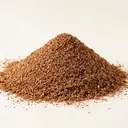
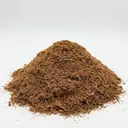
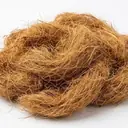
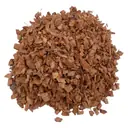
01 · What coir is: pith, fiber and chips.
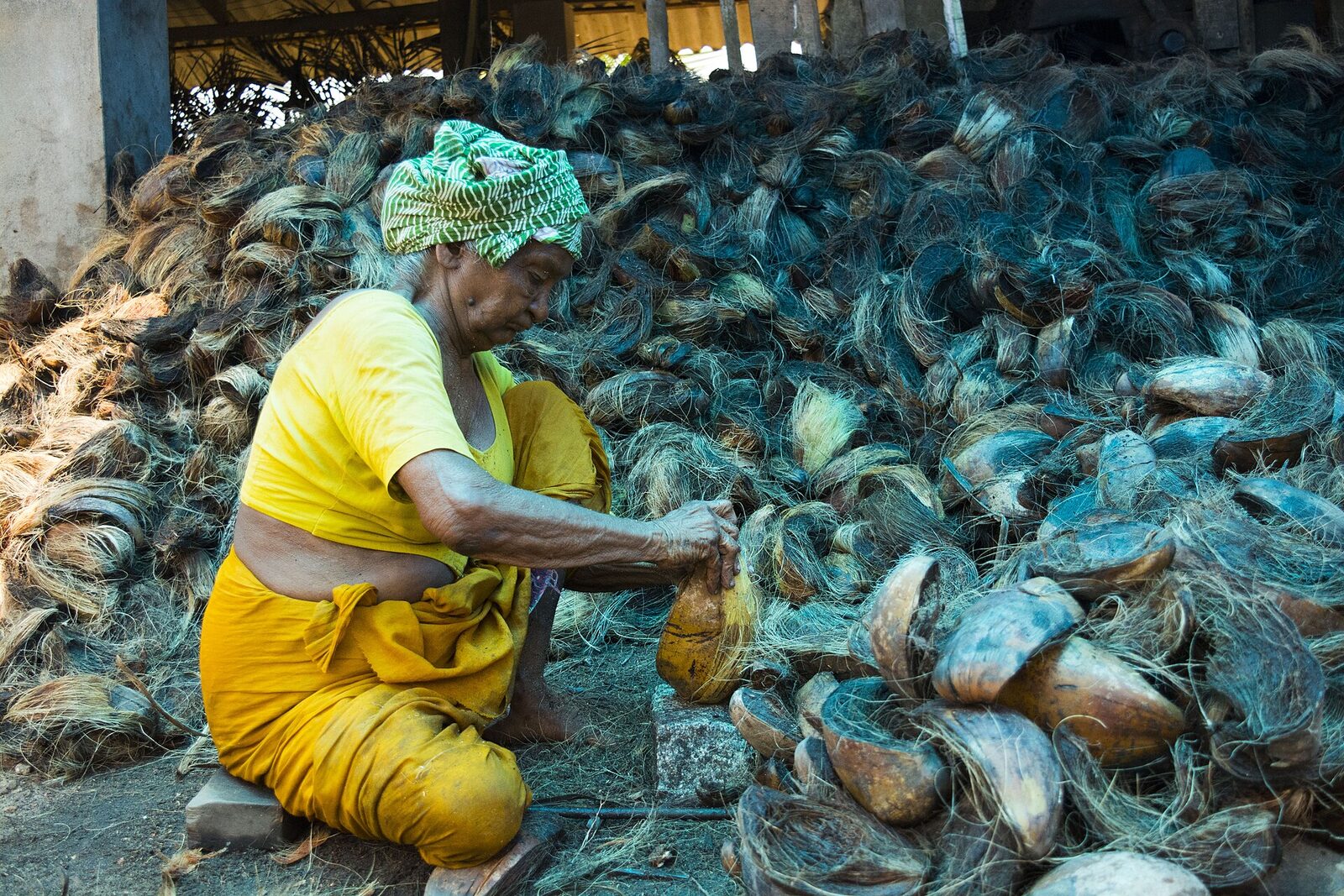
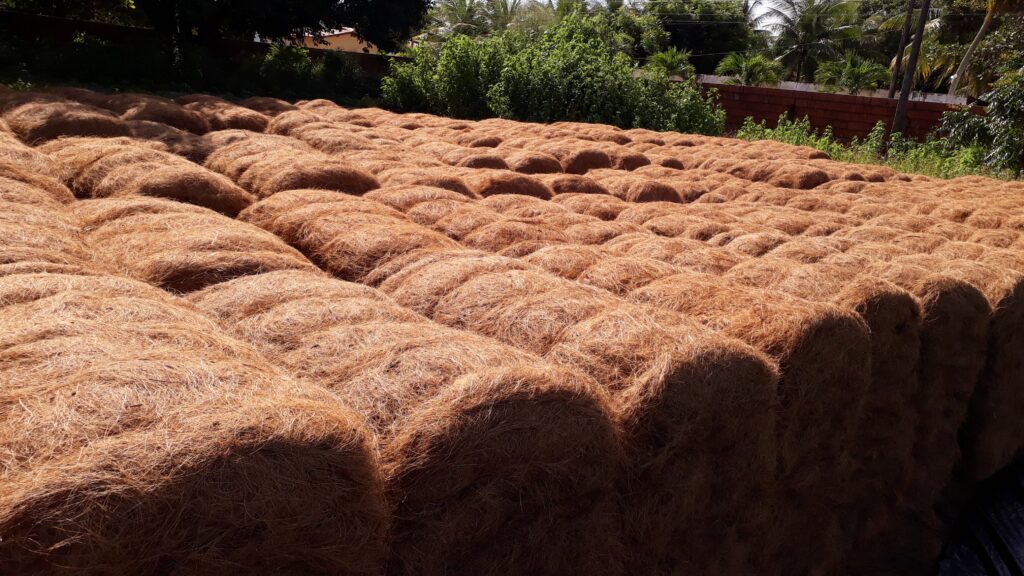
Coir is the fibrous husk, the mesocarp, of the coconut, Cocos nucifera. Mechanically opened, the husk separates into two fractions: a long, stiff bristle fiber, about 30 % of the dry mass, and a fine, spongy, cork-like material that fills the space between the fibers, about 70 %.[1] The fine fraction is coir pith, sold in horticulture as coco peat (also written cocopeat), coir dust or, in Latin America, pó de coco and fibra de coco. A third product, husk chips or coco husk chips, is not a fraction at all: it is the whole husk cut into 10–20 mm pieces before any separation.
For most of the twentieth century the fiber was the product, spun into rope, matting and brushes in Kerala and Sri Lanka, and the pith was left in heaps outside the mills. From the 1990s, growers in the Netherlands and Israel began using washed coir pith as a growing medium, because it holds water like peat, drains well and keeps its structure over a growing season. Today coir pith is the largest coir export by value: it accounted for 59.6 % of India's US$ 434 million of coir exports in FY 2024-25, against 12.1 % for fiber and 16.7 % for tufted mats.[2]
Wageningen University and the Dutch substrate certifier RHP put coir at 12.5 % of global growing media by volume in 2019, second only to peat.[3] Most of that volume is shipped as compressed coco peat blocks, usually the 5 kg block, palletised in 40' HC containers, and rehydrated at the greenhouse; the trade also sells the same material as grow bags and slabs for tomato, pepper and berry crops.
"'Coco pit' is a misnomer. 'Pit' means peat, and coir peat doesn't exist."Ing. Adalberto Romero, coir-substrate specialist, Science Fetti / El Semillero webinar, April 2025
02 · Producing countries: India, Sri Lanka and the others.
Coconuts grow across the tropics, but coir processing is concentrated where a fiber industry already existed when the pith market developed: the Tamil Nadu and Kerala coasts of India, and the coconut-growing districts of western Sri Lanka. Together the two countries are estimated to supply about 90 % of the world's coir fiber, roughly 350,000 tonnes a year, and a similar share of traded pith.[4]
Other large coconut producers do not export much coir. Brazil, Mexico, Indonesia and the Philippines all process husk, but Brazil and Mexico in particular have large domestic horticulture and nursery markets that absorb most of their pith and fiber. Mexico's coir producers in Colima supply the country's own greenhouse and berry sector, about 41,000 hectares. Brazil's producers supply Brazilian substrate manufacturers, forestry nurseries and vegetable growers, and the country still imports processed coir on top of that. Brazil also appears among HS 5305 exporters, but that line is sisal from Bahia, which shares heading 5305 with coir; Brazil's genuine coir exports were 196 t in 2025.

| Origin | Scale | Year | Source |
|---|---|---|---|
| India | 1.34 Mt coir products · US$ 434 M · 121 countries · pith 59.6 % of value | FY 2024-25 | IBEF / Coir Board of India |
| India, momentum | US$ 209 M Apr–Jul FY26, +62.9 % year on year (price-driven) | 2025-26 | IBEF / Seair |
| Sri Lanka | Fiber and coir-pith products US$ 239.8 M = 27.7 % of US$ 864 M coconut exports | 2024 | Sri Lanka Export Development Board |
| Vietnam | Fast-growing exporter to China, USA, Australia (12 % of Australian imports) | 2024-26 | Volza |
| Indonesia | Emerging washed coco-peat exporter | 2026 | Coconut Community International |
| Philippines, Thailand | Named producers; no consolidated export tonnage published | 2025-26 | Industry reporting |
| Mexico | Large substrate producer (Colima); output mostly consumed by Mexico's ~41,000 ha of greenhouses and berry farms | 2026 | Industry disclosure, Colima |
| Brazil | HS 5305 exports of US$ 45.6 M in 2025 are 99.85 % Bahia sisal; coir exports 196 t (2025), Ceará to the Netherlands; pith consumed domestically | 2024-25 | Trade data, HS 5305 |
HS 5305 covers coir "raw or processed but not spun", which is why Brazil's raw-fiber exports rank high while its processed-substrate exports are negligible. Shipment counts published by Volza and Seair are not tonnages.
The concentration matters because both origins share the same weather. The south-west monsoon (June–September) slows sun-drying and processing on India's west coast and in Sri Lanka, and the north-east monsoon (October–December) does the same in the Tamil Nadu coir belt around Pollachi and Tuticorin, so the wet window for the two main origins runs from June to December.[5] In 2025 the supply shock was structural as well as seasonal: Kerala's output was reported down by more than 40 % on pest pressure, ageing palms and rainfall, copra prices reached 77-year highs and raw pith prices rose 25–35 % between 2022 and 2025.[6] Sri Lanka's nut harvest fell from 3.35 billion in 2022 to 2.68 billion in 2024, a 20 % decline, before Cyclone Ditwah in December 2025.[7]
03 · Importing countries.
Coir pith imports track protected horticulture. The official trade line for coir is HS 5305 (coir and other vegetable fibres, raw or processed but not spun). On that line, UN Comtrade records the United States as the largest importer at 82,100 tonnes in 2025, down from 87,600 t in 2024, with a small number of importers handling most of the volume.[8] The Netherlands is Europe's hub at 67,400 t in 2025, up from about 55,000 t in 2024; shipment records show the top three importers taking about two-thirds of pith imports and a single company most of the coir-fiber imports.[9] Spain (40,000 t), Canada (32,200 t), Germany (about 22,000 t) and Australia (18,900 t) follow. China, for scale, imported 660,000 t under the same line in 2024, mostly raw fiber.

Behind the tonnage sit specific crops. Spain's 40,000 tonnes feed Almería's 30,000 hectares under plastic and Huelva's berry fields, which grow 40 % of the EU's blueberries.[10] Peru, the world's largest blueberry exporter at US$ 2.3 billion, is expanding coir imports by roughly 69 % a year as new plantings go hydroponic.[11] Japan, which sources half its coco peat from Sri Lanka, typically specifies EC below 0.5 mS/cm.[8] Turkey, according to shipment aggregators, takes several percent of global coco-peat imports at 0 % duty for a greenhouse sector growing near 9 % a year, and the United Arab Emirates, with 161 registered block importers all supplied from India, functions as a Gulf re-export hub.[12] China is the third destination for Indian pith; the Brazilian shipments it receives under HS 5305 are Bahia sisal, not coir.
04 · Why demand is growing.
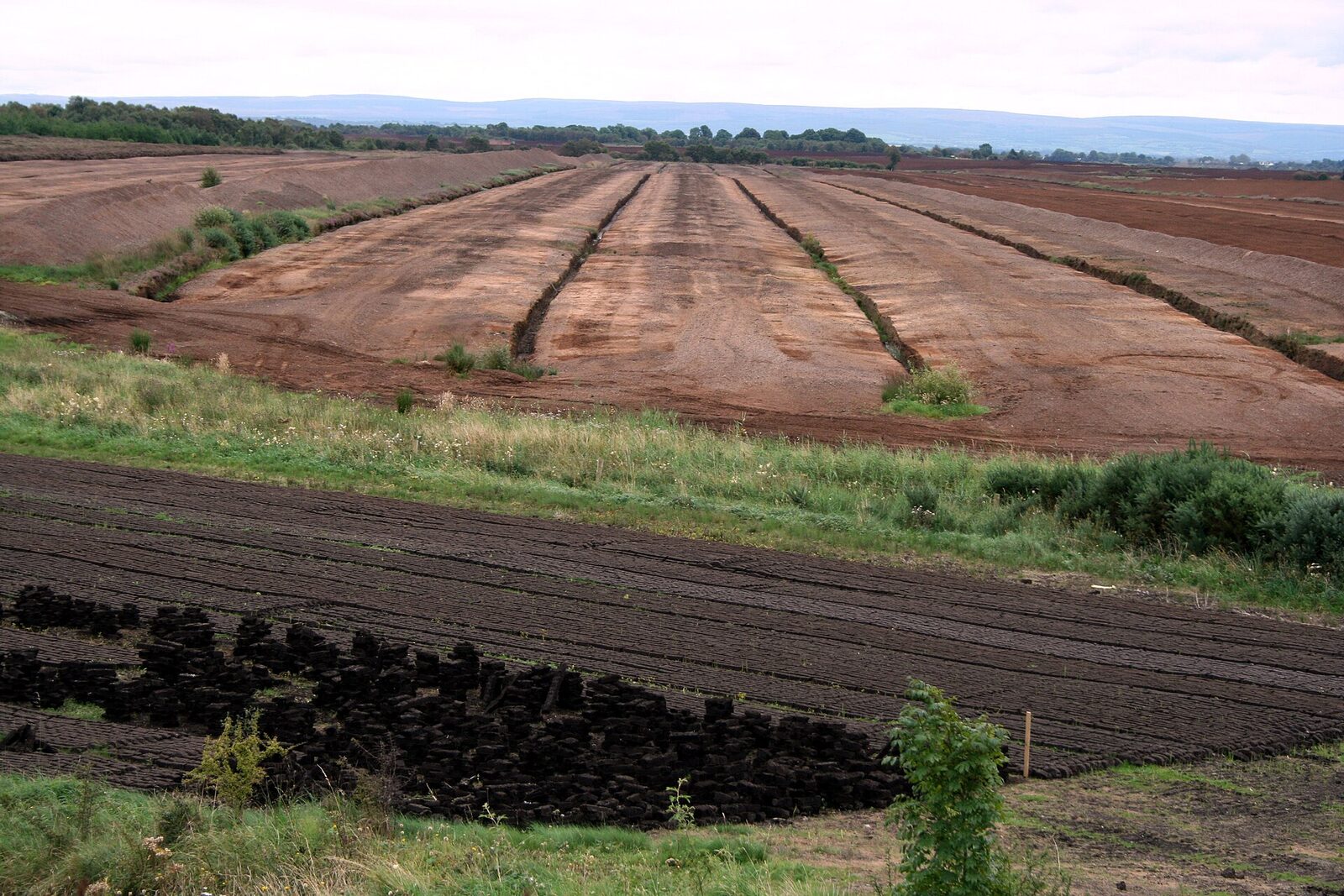
Europe uses about 36 million m³ of growing media a year, roughly 60 % of the world total, and peat still makes up three-quarters of it.[13] That is the volume policy is now pushing out. In England, the government announced a ban on retail sales of peat to amateur gardeners for 2024, with professional horticulture to follow from the end of 2026 and exemptions for young plants and mushrooms running to 2030. As of September 2026 there is no statutory ban in force: the 2024 deadline passed without legislation, the bill has been delayed into 2026, and a full ban is not expected before 2030.[14] In the Netherlands, fourteen signatories including the Ministry of Agriculture signed a covenant in 2022 committing professional growing media to 35 % renewable content in 2025, 50 % in 2030 and 90 % in 2050, and consumer products to 60 % and 85 %; the 2025 targets were met, at 36 % renewable content in professional media and 60 % in consumer products.[15] Germany's federal strategy, which is voluntary, targets peat-free hobby gardening by 2026 and professional horticulture "as far as possible" by 2030, and a large German retailer has required 50 % renewable content in its potting soils since January 2024.[16]

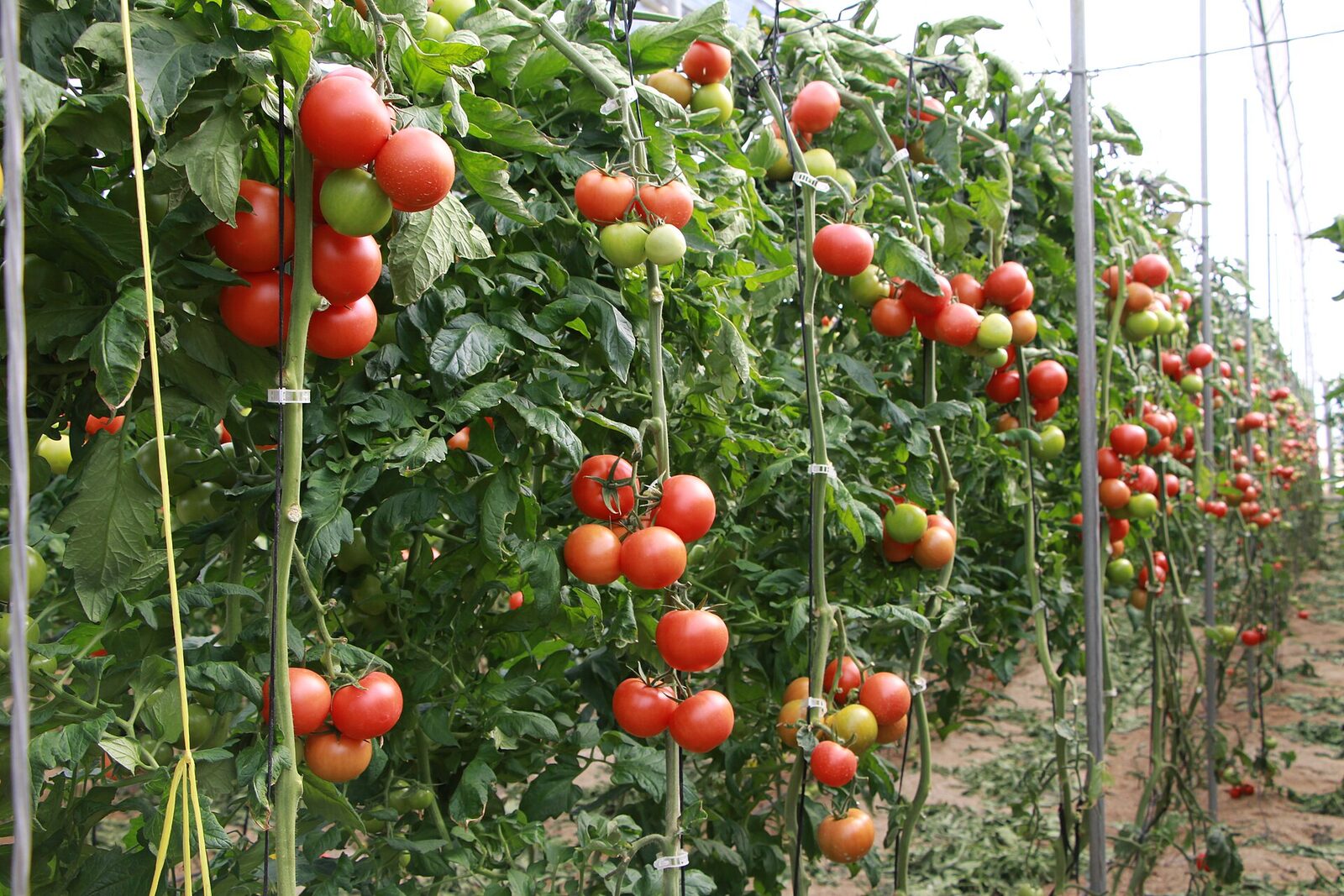
The second driver is the spread of soilless cultivation. Semi-hydroponic production of tomato, pepper, cucumber, strawberry and blueberry is now common in most producing countries, and coir slabs and grow bags are the usual growing medium. Mexico's raspberry and blueberry belt, Peru's coastal blueberry farms, Turkey's Antalya greenhouses and Brazil's strawberry plateau in Minas Gerais all use coir. A Mexican distributor, describing a Jalisco raspberry grower who moved more than a hundred hectares to coir, said: "It completely turned the business around."[18]
The third driver is peat's own supply. The 2025 harvest in Finland and Sweden came in at only 15–25 % of plan, described by the trade press as the worst since 1998, and in Brazil the substrate industry's 22.8 % revenue growth in 2025 was attributed by ABISOLO to scarcity and price of imported peat and perlite rather than to volume.[19]
05 · What limits supply.
Supply is limited by the age of the palms, the number of processors and the distance to the main markets. Wageningen's 2024 review notes that the potting-soil market "has grown larger than the annual supply of coconut products and competition from Asia for coconut products is increasing", with 20–25 % of husk already diverted to non-horticultural uses.[17] Blok estimates the theoretical coir supply available for growing media at about 15 million tonnes field-moist a year, roughly 60 million m³, from 60 million tonnes of fresh coconuts, but the fraction that is collected, processed, washed and compressed to export grade is a small part of that.
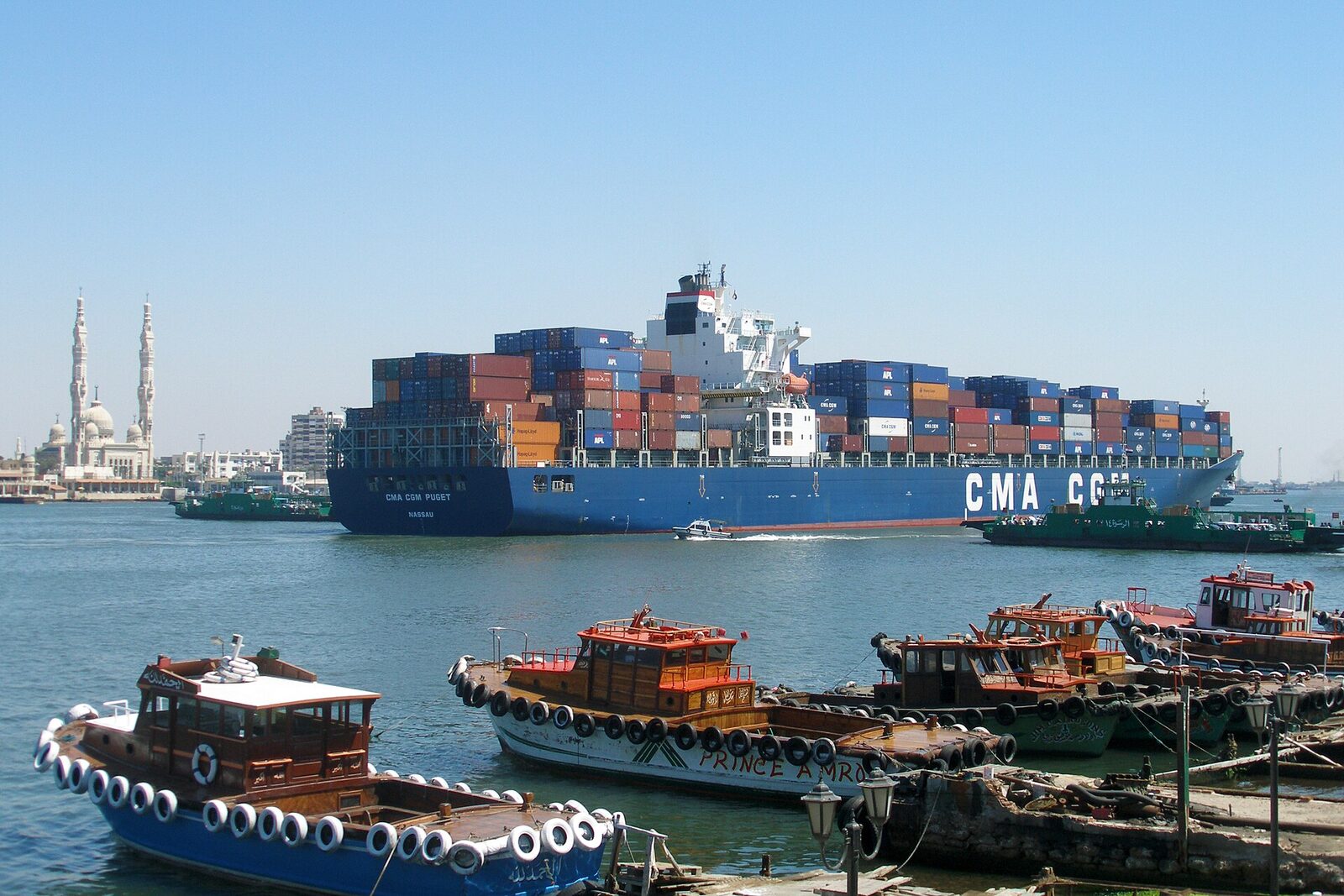
Shipping is the other constraint. Since late 2023 most Asia–Europe container services have been diverted around the Cape of Good Hope, adding 3,500–4,000 nautical miles and roughly 10–14 days each way, and Red Sea surcharges reached €3,000 per container where applied.[20] In September 2026 the return to Suez is partial and service-by-service: some Maersk, Hapag-Lloyd, CMA CGM and MSC loops have moved back through the canal since mid-2026, but most India–Europe services still sail via the Cape. South India or Colombo to Rotterdam is therefore about 35–45 days via the Cape of Good Hope, and about 22–28 days when a service is routed through Suez.[20] FreshPlaza's headline for 2025–26 was "Vessel shortages disrupt cocopeat exports from India and Sri Lanka", with Sri Lankan exporters facing US$ 3,000–4,000 per container in extra costs and rolled bookings.[5]
_001.jpg)
Freight now represents 20–40 % of the landed cost of Asian coir in Europe, against about 15 % before the pandemic, which is why compression matters: a 5:1 block press turns a 40' HC (forty-foot high-cube) into 20–26 tonnes of product, commonly loaded as 22 pallets per container, and cuts per-tonne freight by roughly 80 % compared with loose material.[21] Because the buyer usually arranges the freight, coco peat is quoted as a FOB offer at the port of loading and compared on landed cost at destination.
06 · Grades, EC and what buyers specify.
Coir pith is bought against a short list of physical and chemical parameters, and the trade divides it into three grades according to one of them: electrical conductivity (EC), the measure of dissolved salts. The salt content depends on processing rather than on the coconut. Most Asian husk is retted, soaked for weeks in brackish coastal lagoons, which loads sodium chloride into the pith; the material is then washed, often with water that is itself brackish, to remove part of what retting added. Published research on Indian and Sri Lankan coir found EC coefficients of variation between 39 % and 165 % across batches.[22] Importers who ask for low-EC coco peat or a washed block are asking for the second or third grade below; "washed" and "buffered" describe two different treatments, not two names for the same thing.
| Grade | EC (1:5 extract) | How it is achieved | Typical buyer |
|---|---|---|---|
| Natural / unwashed | 0.4 – 6.0 mS/cm raw; low-salt inland husk ≤ ~1.5 | No treatment; provenance and rain-ageing decide the number | Blenders, landscaping, salt-tolerant nursery crops |
| Washed | < 1.0, professional < 0.7 | Two to five freshwater soak-and-drain cycles depending on starting salt | Vegetable and nursery growers, substrate manufacturers |
| Buffered | < 0.5, down to ~0.25 (RHP) | Washing plus a calcium-nitrate soak that displaces exchange-bound potassium and sodium | Berries, hydroponic tomato and pepper, certified export |
Raw EC range per EMBRAPA Comunicado Técnico 226 (dry coconut husk, Northeast Brazil). Buffered specification per RHP-certified products on the European and Turkish markets. Buyers additionally specify moisture (below 15–18 %), pH (5.5–6.5), expansion (13–16 liters per kg of block, so 65–80 liters per 5 kg block), sand and impurities (below 2 %) and particle-size distribution.
Particle size is the other axis. Fine pith expands to about 15 L per kg and lasts 1.5–2 years in the root zone; coarser material and coco husk chips last 8–10 years, which is why orchid and blueberry growers pay a premium for chips.[18] Dust below 0.5 mm is unwanted because it clogs the air-filled pores that make coir useful in the first place.
What importers ask for
The questions below were asked, in these words, by a Turkish importer of coco peat blocks in 2026. They are the usual checklist before a first FOB offer on 5 kg blocks, and the answers describe general market practice.
"How many liters per 5 kg block?" Expansion is quoted in liters per kg; the market range is 13–16 L/kg, so a 5 kg block yields roughly 65–80 liters of loose coco peat once hydrated, and importers often ask for a photo of a block expanded in a trolley to check it.
"Ec level should be less than 0.5" An EC (1:5) below 0.5 mS/cm is the buffered grade in the table above; washed blocks are usually specified below 0.7 or 1.0, and the extraction method (1:5 by volume) has to be stated with the number for it to mean anything.
"Could you make a FOB offer to us?" Coco peat is normally priced FOB port of loading, per tonne or per container, with the buyer arranging freight and insurance, so the buyer compares offers on landed cost rather than on the FOB figure alone.
"How would be the payment term?" Common terms for first shipments are an advance with the balance against a copy of the bill of lading, or D/P (documents against payment) through the banks; letters of credit are more usual for larger contracts.
"I suppose you can load 22 pallets per container" A 40' HC takes about 20–22 pallets of 5 kg blocks, roughly 20–26 tonnes net depending on pallet height and road weight limits; pallets must be ISPM-15 treated, the phytosanitary certificate covers product and pallets, and some importing countries require fumigation on arrival.
"We can buy 2 containers per month" Regular importers buy on a monthly cadence of one to several containers, and they judge a supplier on consistent EC, moisture and expansion lot after lot rather than on a single sample.
07 · Brazil: large coconut producer, small coir exporter.
Brazil is the fourth- or fifth-largest coconut producer in the world, and the crop supports more than 700,000 direct jobs.[23] The national harvest was 2,105,345 thousand fruits (about 2.1 billion coconuts; IBGE counts fruits, not tonnes) in 2024 on about 187,000 hectares (IBGE PAM 2024). Ceará has been the largest producing state since 2020, at 588,495 thousand fruits in 2024, up 13.4 % on the year and 28 % of the national total, ahead of Bahia (about 360 million fruits), Sergipe, Pará and Pernambuco. The municipality of Paraipaba, on Ceará's coastal plateau, produced 155,899 thousand fruits in 2024, second in the country, and coconut is close to a fifth of its GDP.[24]
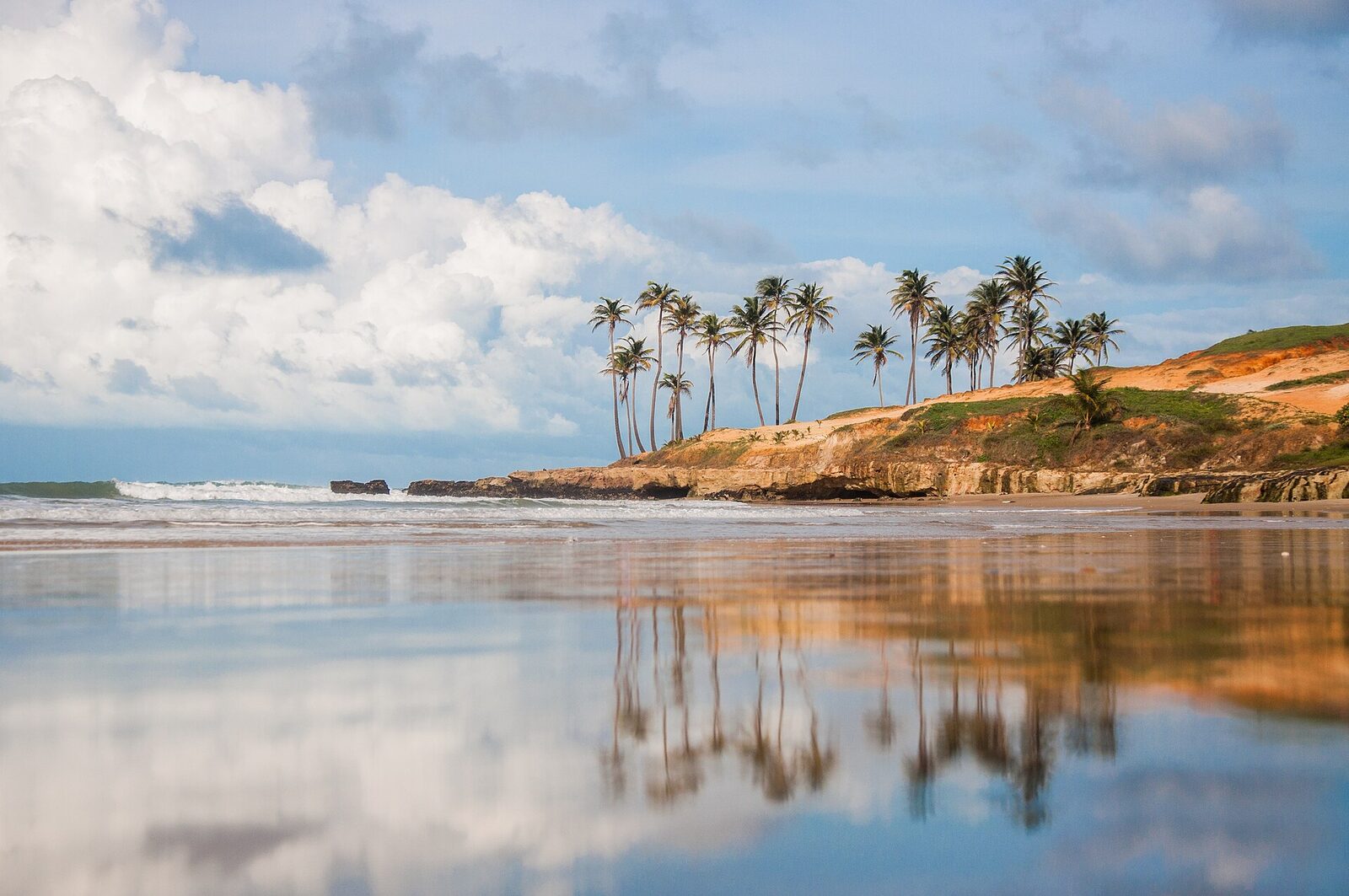

Brazil processes far less coir than it could, and what it processes stays at home. Brazil appears among HS 5305 exporters with US$ 45.6 million in 2025, US$ 33.4 million of it to China, but 99.85 % of that value is sisal from Bahia; genuine coir exports were 196 t in 2025 and 642 t in January–August 2026, all from Ceará to the Netherlands (data). At the same time the country imports about US$ 5.4 million of processed coir substrate a year, 97 % from India, for its own greenhouse and nursery sector.[25] The reason is the domestic market: forestry nurseries producing about 1.5 billion eucalyptus seedlings a year, the strawberry and tomato growers of Minas Gerais and São Paulo, the flower sector around Holambra and the highway erosion-control blankets required by DNIT all buy Brazilian pith and fiber, and the few processors sell everything they make. None of the eleven multinational coir groups that supply Europe and North America operates in Brazil.
The domestic processors are few and regional: a handful of plants in Pará, Bahia and Ceará, most of them tied to a single plantation or copra operation, selling washed but not buffered pith at high moisture and, in the words of one of them on national television in August 2026, keeping "practically no inventory".[26] Carve Substratos (Paraipaba, Ceará) processes dry inland husk that is not retted into coir pith and long fiber, for Brazilian substrate manufacturers and nurseries and for export through the Port of Pecém, in the same state. Above the processors sit the substrate blenders of São Paulo and the South, which buy coir as an input; the market leader has announced a R$ 100–150 million plant to double capacity by 2027.[27]
Two format gaps stand out: as of 2026 no Brazilian producer presses 5 kg export blocks and none manufactures pre-buffered coir, so Brazil's blueberry growers import buffered slabs from Spain and Israel while most Brazilian husk is still not processed at all. The domestic substrate market itself is growing fast: ABISOLO puts it at R$ 517 million in 2025, up from R$ 390 million in 2023, on about 750,000 m³ of product, split roughly a fifth each between forestry seedlings, vegetables, fruit, coffee and citrus, and flowers.[19] Production by state, processors, demand by segment and trade flows are covered on the detailed Brazilian market page →
"Asia will overtake Europe as the largest sales market."Blok, Verhagen & Wesemael, Acta Horticulturae 1305, 2021, on growing-media demand to 2050
08 · Outlook to 2030.
Three points are reasonably clear. Coir volume will grow, because peat is being restricted in Europe and no other renewable material is available at the same scale. India and Sri Lanka will remain the main suppliers, because the mills, ports and certifications are there. And importers will look for additional origins, because two suppliers with the same monsoon, the same ageing palms and the same shipping route represent a concentration risk.
The additional origins are Vietnam and Indonesia in Asia, Mexico for North America, and Brazil for the Atlantic. Brazil has a dry season in Ceará from June to December, which overlaps India's south-west monsoon (June–September) and Tamil Nadu's north-east monsoon (October–December); husk that is not retted and therefore lower in salt at source; and a container port, Pecém, with direct Atlantic services to Europe that do not pass through Suez or the Red Sea; transit per carrier booking (see coir fibre for buyers in Europe). Pecém handled 706,509 TEU in 2025, a record and 27 % more than in 2024.[28] Its limitation is processing capacity, and the fact that the domestic market takes most of what is produced. Carve's export programme sets aside part of its output for export; the specification and logistics are documented here. For a side-by-side look at how Brazilian husk differs from Indian and Sri Lankan coir on salt, harvest timing and lead time, see Brazilian coir vs Asian coir.
Regional market intelligence.
Each of these markets has its own supply chain, regulatory environment and competitive dynamics. Our regional reports cover market size, buyer segments, logistics from Pecem and trade terms.
1.04B ft² greenhouse
83,000 ha greenhouse
10–14 days from Pecem
8,300 producers
09 · Frequently asked questions.
Which countries produce the most coir?
India and Sri Lanka supply roughly 90 % of the world's coir fiber and pith. India exported 1.34 million tonnes of coir and coir products worth US$ 434 million to 121 countries in FY 2024-25, with coir pith about 60 % of that value. Sri Lanka's fiber and coir-pith exports were worth US$ 240 million in 2024. Vietnam, Indonesia, the Philippines, Thailand and Mexico are secondary producers. Brazil is a net importer of coir: its HS 5305 exports are mostly Bahia sisal (data).
Which countries import the most coir pith (coco peat)?
Under HS 5305 (coir and other vegetable fibres, raw or processed but not spun), UN Comtrade records the United States as the largest importer at 82,100 tonnes in 2025 (87,600 t in 2024), followed by the Netherlands (67,400 t), Spain (40,000 t), Canada (32,200 t), Germany (about 22,000 t) and Australia (18,900 t). Japan shows only 6,600 t under HS 5305 because most of its coco peat enters under other tariff lines, and South Korea classifies coco peat outside HS 5305, so no reliable figure exists for it. HS 5305 also includes sisal and abaca, so these are upper bounds for coir.
How big is the coir market and how fast is it growing?
Market reports value the coco coir market at roughly US$ 0.4–0.5 billion in 2025 under narrow definitions and up to US$ 2 billion under broader ones, growing 6–8 % a year. In volume, Wageningen University projects coir growing media rising from 11 million m³ in 2017 to 46 million m³ by 2050, within a total growing-media market expanding from 67 to 283 million m³.
Why is demand for coir growing?
The phase-out of peat in European horticulture (in the UK a retail ban was planned for 2024 but no statutory ban is in force yet, legislation has been delayed into 2026 and a full ban is not expected before 2030; the Dutch covenant met its 2025 targets, 36 % renewable content in professional media and 60 % in consumer products, and targets 50 % professional by 2030; Germany's voluntary strategy aims at peat-free hobby gardening by 2026 and professional horticulture as far as possible by 2030), the global expansion of soilless cultivation of berries, tomatoes and peppers, and the 2025 Nordic peat harvest that came in at only 15–25 % of plan.
What is the difference between coir pith, coir fiber and husk chips?
All three come from the coconut husk. Coir pith (coco peat) is the fine, spongy fraction, about 70 % of husk mass, used as a growing medium. Coir fiber is the long bristle fraction, about 30 %, used in substrates, geotextiles, mattresses and composites. Husk chips are 10–20 mm pieces cut from the whole husk, used for orchids, blueberries and drainage layers.
Does Brazil produce coir pith and coir fiber?
Yes, but most of it is consumed domestically by nurseries, substrate manufacturers and vegetable growers. Brazil harvested 2,105,345 thousand fruits (about 2.1 billion coconuts) in 2024 (IBGE PAM); Ceará is the largest producing state (588,495 thousand fruits) and Paraipaba, Ceará, produced 155,899 thousand fruits, second among municipalities. Processing is done by a small number of regional plants in Pará, Bahia and Ceará, including Carve Substratos in Paraipaba, Ceará. Brazil's US$ 45.6 million of HS 5305 exports in 2025 were almost entirely Bahia sisal; genuine coir exports were 196 t, Ceará to the Netherlands. Brazil imports about US$ 5.4 million of processed substrate, 97 % from India.
Importing coir pith or fiber? Export specification and terms. Request an FOB Pecém quote.
10 · Sources.
- Blok, C. et al. (2024). Growing media for food and quality of life in the period 2020–2050, Wageningen University & Research, Frame 2 and §9.2.1 (husk split 70/30, 20–25 % non-horticultural diversion, coir +180 %).
- IBEF, "Coir Industry in India", FY 2024-25 export statistics — ibef.org/exports/coir-industry-india; Coir Board of India, exporter-wise export data 2024-25.
- Wageningen UR and RHP, coir share of global growing media, via HortiDaily, 21 January 2019.
- Industry estimate of the India–Sri Lanka combined share of world coir fiber (~350,000 t/yr), 2026 trade reporting.
- FreshPlaza, "Vessel shortages disrupt cocopeat exports from India and Sri Lanka" — freshplaza.com.
- Indian industry reporting on Kerala production decline, copra prices and raw pith price increases, 2022–2025.
- Sri Lanka coconut production 2022–2024 and Cyclone Ditwah impact, industry reporting; Sri Lanka Export Development Board, 2024 coconut industry report — export-lanka.com.
- UN Comtrade, imports under HS 5305 by reporter (USA, Netherlands, Spain, Canada, Germany, Australia, Japan, South Korea, China), partner World, 2024 and 2025 — comtradeplus.un.org (preview API, fetched 5 September 2026). Importer concentration and Japan's EC specification per Seair Exim shipment records — seair.co.in.
- UN Comtrade, Netherlands HS 5305 imports 2024–2025 (2024 weight estimated by Comtrade); Volza, Netherlands coco-peat and coir-fiber importer records; AIPH / HortiDaily on coco peat's share of Dutch professional substrates.
- UN Comtrade, Spain HS 5305 imports 2025 (weight from the transport-mode row); Junta de Andalucía, protected cultivation in Almería; EU blueberry production statistics for Huelva.
- Volza / ExportGenius, Peru coir imports; Peruvian blueberry export statistics 2025.
- Volza, Turkey and UAE coir import records; Turkish customs tariff schedule for HS 5305 / GTIP 1404.90.
- Hirschler, O. & Osterburg, B. (2022), Thünen Institute, peat use in European growing media; Schmilewski, G. (2009, 2017).
- DEFRA, "Ending the retail sale of peat in horticulture" consultation — consult.defra.gov.uk; Hansard, Horticultural Peat (Prohibition of Sale) debate, 16 April 2024; Peat Free Partnership, legislation timeline — peatfreepartnership.org.uk; UK Parliament, Bill 3886; The Wildlife Trusts on the 2030 timeline.
- Covenant on the Environmental Impact of Potting Soil and Substrates (Netherlands, 2022) — turfvrij.nl (English text); LTO Nederland, 2025 covenant results (36 % renewable professional, 60 % consumer) — lto.nl; RHP announcement.
- BMEL / BMLEH, Peat Use Reduction Strategy — bmleh.de; Thünen Institute, "The way to peat-free gardening"; LIDL Germany renewable-content requirement per Blok et al. 2024.
- Blok, C., Verhagen, J. & Wesemael, W. (2021). "Trends in rooting media in Dutch horticulture during the period 2001–2050", Acta Horticulturae 1305: 341–355, Table 4; Blok, C., interview with Klasmann-Deilmann, 2019.
- Romero, A. (2025), coir-substrate webinar, Science Fetti / El Semillero (expansion, durability, dust); Cadena, D. (DidiQ Global), coir in horticulture webinar (Jalisco raspberry case).
- ABISOLO, Anuário 2025/2026, special fertilisers and substrates — abisolo.com.br; Forbes Brasil, May 2026, on 2025 substrate revenue; HortiDaily / FloralDaily on the 2025 Nordic peat harvest.
- Euronews, 14 August 2026, "Maersk returns another Asia–Europe service through Suez, but wider return remains distant" — euronews.com; The Maritime Executive on MSC's return to Suez; SEKO Logistics (2025), Asia–Europe trade lane guide; GoFreight (2026) on the Cape diversion adding 10–14 days; Zencargo, Red Sea reopening 2026. Transit ranges are approximate.
- Industry synthesis of freight share in CIF cost of Asian coir; block compression and container loading per coir export specifications; Blok et al. 2024 on compression "saving a factor of 4–4.5 in volume".
- Prasad, M. (1997), Acta Horticulturae 450 (EC variation in coir, n = 116); Raviv, M., Lieth, J.H. & Bar-Tal, A. (2019), Soilless Culture, 2nd ed., Elsevier, ch. 8; EMBRAPA Tabuleiros Costeiros, Comunicado Técnico 226 (raw EC range, physical properties of dry-husk pith).
- IBGE, coconut production in Brazil; Câmara dos Deputados, coconut sector employment; Embrapa and Banco do Nordeste, state rankings.
- IBGE, Produção Agrícola Municipal 2024, SIDRA table 1613 (coco-da-baía, quantity produced, Brazil, Ceará and municipalities) — sidra.ibge.gov.br/tabela/1613; municipal ranking via Diário do Nordeste — diariodonordeste.verdesmares.com.br; IBGE Explica, coco-da-baía.
- Brazilian trade data for HS 5305, exports 2024–2025 and imports 2025 (ComexStat, MDIC).
- Alagoas Rural / TV, interview with the CEO of a Brazilian coir producer, August 2026.
- Company disclosures of Brazilian coir processors and substrate blenders; AgFeed and trade press on the new substrate plant announced for 2027.
- APM Terminals Pecém, shipping lines — apmterminals.com/en/pecem; Governo do Ceará / CIPP, 24 February 2026, Porto do Pecém 2025 results (706,509 TEU, +27 %; 20.96 Mt) — ceara.gov.br; FUNCEME, quadra chuvosa (Ceará rainy season Feb–May); IMD, south-west and north-east monsoon reports.