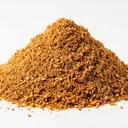
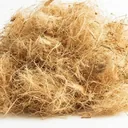
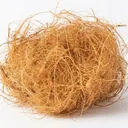
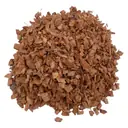
01 · Direct answer.
It depends on the crop's salt tolerance. Natural coir pith suits coffee, clonal eucalyptus, citrus, landscaping and leafy vegetables. Washed coir suits potted ornamentals, forestry seedlings and soilless vegetables. Buffered coir is the grade growers use for strawberry, tomato, flowers, orchids and seed sowing. The EC limit and its method go into the contract.
| Grade | Process | Suited crops |
|---|---|---|
| Natural (unwashed) | No washing, no additives | Coffee, clonal eucalyptus, citrus, landscaping, leafy vegetables |
| Washed | Freshwater washing | Potted ornamentals, forestry seedlings, soilless vegetables |
| Buffered | Washing, then calcium or magnesium | Strawberry, tomato, flowers, orchids, seed sowing, organics |
Grades: Natural (unwashed, no additives), from our plant in Paraipaba, Ceará. Buyers who need a lower EC wash or buffer the pith at their end. Tell us your crop, your EC method and target, your volume per month and your port. See coir pith supplier and buffered coco coir.
02 · Why coconut husk EC varies.
Raw dry coconut husk has a documented EC of 0.4 to 6.0 mS/cm (1:5) in the EMBRAPA literature, a fifteen-fold range within the same material.[1] The salts are part of the husk itself, not external contamination:
- Potassium 1.60 %, chlorine 1.80 % and sodium 0.38 % in dry husk, according to EMBRAPA's Table 1.[1]
- The pH of raw dry husk runs 4.9 to 6.0.[1]
- The washing target cited by EMBRAPA is EC below 1.0 mS/cm.[1]
This is why no serious data sheet publishes a single EC value for raw pith: what can be published is the band of each grade and a measurement on each lot.
Where the husk comes from sets the starting point. Carve's raw material is dry mature husk, rain-aged inland and never retted in brackish water; washing uses low-conductivity well water, and EC is stated with its test method.[6] Most coir traded internationally is made from husk retted in brackish coastal lagoons, and research on Indian and Sri Lankan coir found coefficients of variation in EC of 39 % to 165 % between batches.[6] The origin comparison is covered in Brazilian coir vs Asian coir.
03 · Which crops are salt-sensitive.
Adalberto Romero, with more than 20 years in the coir substrate industry, lists lettuce, strawberry and blueberry among the salt-sensitive crops, and explains the mechanism that separates washed from buffered pith:[2]
- Water alone does not displace the sodium and potassium held in coir's organic complex. Only calcium or magnesium does.[2]
- In a sensitive crop grown on pith that was only washed, fertigation with calcium and magnesium performs that displacement inside the crop, and the released sodium and potassium reach the roots.[2]
- The calcium or magnesium treatment uses one of the two, not both, and a final wash removes the excess.[2]
- This is why growers match strawberry, tomato, flowers, orchids and seed sowing to a buffered grade.[4]
David Cadena, a Mexican coir substrate specialist, adds that coir gives the grower a management buffer for EC and pH that synthetic substrates do not, and that when a nursery crop later moves to production in coir, coir in both phases is ideal.[3] The detail of each process is in Washed vs unwashed coir pith.
04 · How EC is measured and reported.
- Method: 1:5 extraction by volume, calibrated conductivity meter, on every lot.[4]
- The extract ratio changes the reading: a 1:1.5 extraction gives different values from a 1:5 extraction. Compare data sheets only when the ratio is the same.[5]
- The result is stated with its test method, together with pH, bulk density and particle size.[4]
- A lot outside the contracted limit does not ship.[4]
What a certificate of analysis shows and how to check each number is in Coir pith certificate of analysis (COA).
05 · How to fix EC in the contract.
- State the crop and the phase (sowing, seedling, production). The table in section 01 points to the grade.
- Choose the grade by process (Natural, Washed or Buffered), not by an isolated number.
- Write an EC ceiling (1:5) into the contract. Substrate manufacturers often set a ceiling and correct EC in their final blend.[4]
- Ask for the measured values, with their test method, before the container is stuffed.
Company registration and location data are on Company facts; the full purchase checklist (moisture basis, expansion, packing, HS code, transit) is in the specification checklist.
06 · Frequently asked questions.
Can Natural coir pith be used for strawberries?
Not as the standard recommendation: strawberry growers use buffered coir pith. Strawberry is among the salt-sensitive crops cited by Adalberto Romero, and in those crops pith that was only washed carries a risk: when the grower fertigates with calcium and magnesium, those ions displace the sodium and potassium held in coir's organic structure, which return to the root zone.
What EC does coir pith need for tomatoes?
Tomato growers usually use a buffered grade, as for strawberry, flowers, orchids and seed sowing, and soilless vegetables in general use a washed grade. The exact limit and its method are fixed in the contract. Grades: Natural (unwashed, no additives), from our plant in Paraipaba, Ceará. Buyers who need a lower EC wash or buffer the pith at their end. Tell us your crop, your EC method and target, your volume per month and your port.
What EC does coir pith need for seedlings and nurseries?
Forestry seedlings and potted ornamentals use a washed grade. Clonal eucalyptus, coffee and citrus are among the crops suited to Natural, with a limit in the contract. Seed sowing of sensitive crops uses a buffered grade.
Are EC 1:5 and EC 1:1.5 the same thing?
No. The substrate-to-water ratio of the extract changes the number read on the conductivity meter, and a 1:1.5 ratio gives different values from a 1:5 ratio. All bands on this page use the 1:5 extract by volume. When comparing data sheets from different suppliers, check the ratio before comparing the numbers.
Why does Carve not publish a single EC value for its coir pith?
Because raw dry coconut husk has a documented EC of 0.4 to 6.0 mS/cm (1:5) in the EMBRAPA literature, a fifteen-fold range that comes from the husk's own natural salts (potassium 1.60 %, chlorine 1.80 %, sodium 0.38 %). A single value would not describe the material. The EC limit and its test method are fixed in the contract.
07 · Sources.
- EMBRAPA Tabuleiros Costeiros, Comunicado Técnico 226 (COT-226-19): raw dry husk EC 0.4-6.0 mS/cm, pH 4.9-6.0, washing target below 1.0 mS/cm, composition K 1.60 % / Cl 1.80 % / Na 0.38 % of dry husk.
- Ing. Adalberto Romero webinar (Science Fetti / El Semillero, Colombia, 2025): salt-sensitive crops, water does not displace Na/K from the organic complex, calcium or magnesium treatment, risk of washed-only pith in sensitive crops.
- Lic. David Cadena webinar (Mexico, hosted by Riego Rotoplas, 2026): coir as an EC and pH management buffer, coir-to-coir recommendation between nursery and production.
- Carve public specification: Coir Pith and Quality pages: grades and the 1:5 method.
- Carve bench procedure: the extract ratio is stated on every result, because 1:1.5 and 1:5 give different readings.
- Carve raw-material description on Import Coir from Brazil (dry inland husk, never retted, artesian well water for washing); Prasad, M. (1997), Acta Horticulturae 450 (EC variation in Indian and Sri Lankan coir); Raviv, M., Lieth, J.H. & Bar-Tal, A. (2019), Soilless Culture, 2nd ed., ch. 8.