01 · Market overview: Antalya, Mersin and the Mediterranean greenhouse belt.
Turkey is one of the world's top protected-cultivation countries and the largest greenhouse producer in the eastern Mediterranean. The country's total protected cultivation area is approximately 83,000 hectares, spanning glass greenhouses, plastic tunnels and high tunnels across the southern and western coasts.[2]
Vegetable exports reached approximately USD 980 million in 2024, driven by tomato, pepper and cucumber production from the Antalya and Mersin corridors.[1] IMARC Group values Turkey's greenhouse horticulture market at USD 472.1 million in 2025, projecting it to reach USD 1,009.7 million by 2034 at an 8.55 % CAGR.[1] This growth rate places Turkey among the fastest-expanding greenhouse markets globally.
The sector's growth is underpinned by rising export demand from the EU, Russia and the Gulf states, government incentives for modern greenhouse construction, and the country's natural advantage in geothermal energy for heating. Turkey has the world's fourth-largest geothermal reserves, and geothermal-heated greenhouses are expanding rapidly outside the traditional Mediterranean belt.
02 · Regional breakdown: Antalya, Mersin-Adana and emerging clusters.
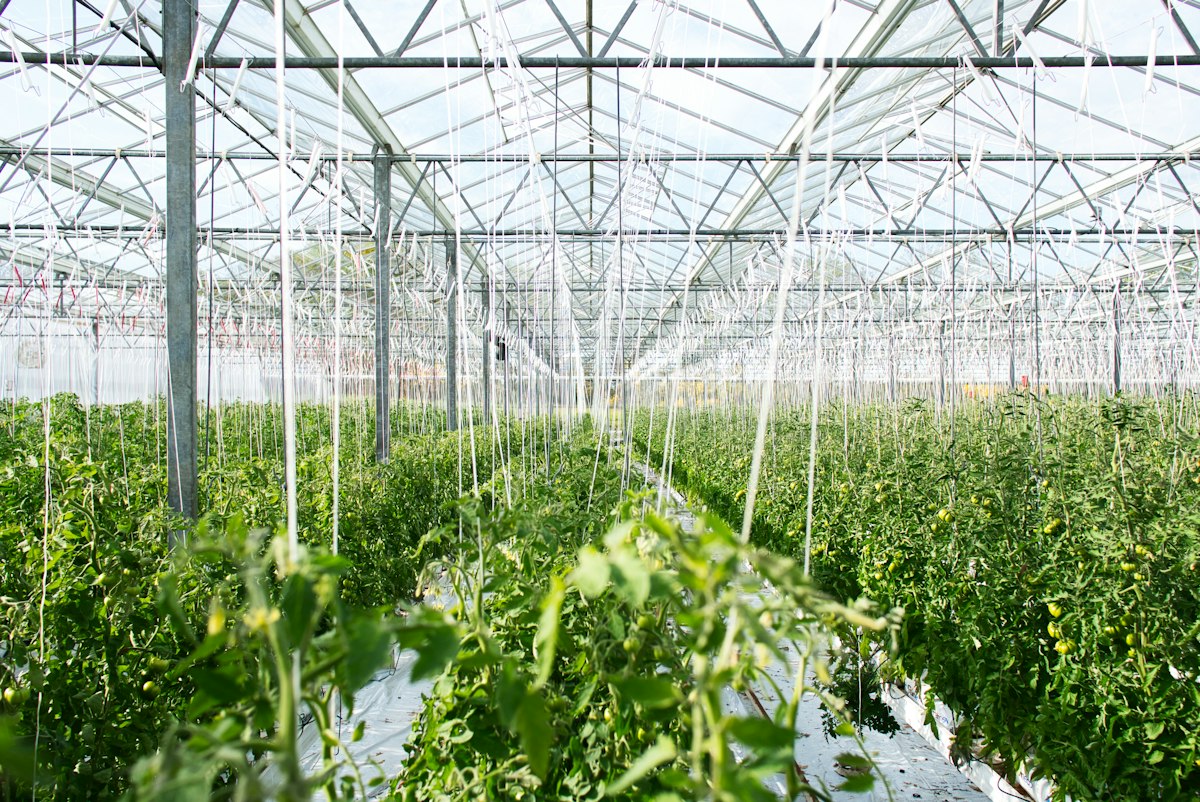
Antalya accounts for roughly 50 % of Turkey's national greenhouse area and is the centre of the country's protected-cultivation industry. The province exported USD 441.3 million in vegetables in 2024, with tomato, pepper and cucumber as the main crops.[1] Most professional operations use plastic-covered greenhouses, though modern glass ranges are increasing. Antalya's Mediterranean climate provides natural light and warmth, reducing heating costs, but summer heat management is a growing challenge.
Mersin and Adana (the Cukurova plain) represent the second-largest concentration, with an estimated 15,000-20,000 hectares of protected cultivation.[12] Mersin is Turkey's largest Mediterranean container port and a natural entry point for imported substrates. The region grows citrus, tomato, pepper, strawberry and, increasingly, banana under plastic. The Cukurova plain's alluvial soils and irrigation infrastructure support year-round production.
| Region | Estimated area | Main crops | Notes |
|---|---|---|---|
| Antalya | ~40,000-42,000 ha | Tomato, pepper, cucumber, aubergine | ~50 % of national total; USD 441.3 M vegetable exports |
| Mersin / Adana | ~15,000-20,000 ha | Citrus, tomato, pepper, strawberry, banana | Largest Med container port; Cukurova plain |
| Izmir / Aegean | ~8,000-10,000 ha | Tomato, pepper, cut flowers | Dikili OIZ: 300 ha planned (World Bank) |
| Mugla | ~3,000-5,000 ha | Tomato, citrus, herbs | Tourism-driven local demand |
| Bursa / Marmara | ~3,000-5,000 ha | Tomato, pepper, ornamentals | Proximity to Istanbul market |
Regional area estimates derived from FAO/TUIK aggregate data and industry sources. National total ~83,000 ha.[2][12]
03 · Import volumes and current supply.
Trade data aggregators record approximately 146 coir shipments per year entering Turkey, with India as the dominant origin and Sri Lanka as a secondary, premium source.[3] Based on shipment counts and typical container loads, the total Turkish coir market is estimated at 5,000-9,000 tonnes per year, though this is a low-confidence figure derived from incomplete trade data rather than official statistics.[12]
Indian coir enters Turkey at an FOB price of approximately USD 460 per tonne, with Sri Lankan material commanding a premium for lower EC and more consistent quality.[12] The customs classification is GTIP 1404.90.00.99.19, which carries a 0 % import duty.[4] KDV (value-added tax) of 20 % applies but is recoverable for registered businesses.
| Segment | Estimated volume (t/yr) | Notes |
|---|---|---|
| Professional greenhouse | 3,000-5,000 | Soilless tomato, pepper, cucumber; Antalya and Mersin |
| Hobby and retail | 1,000-2,000 | Garden centres, bagged substrates, urban gardening |
| Seedling and nursery | 500-1,000 | Vegetable and ornamental seedling production |
| Berry and strawberry | 500-1,000 | Grow bags and slabs for table-top strawberry |
Segment estimates are industry-derived and low confidence. Total 5,000-9,000 t/yr.[3][12]
04 · Key crops and substrate adoption.
Turkey's greenhouse crop mix is dominated by fruiting vegetables. Tomato accounts for an estimated 35-40 % of total greenhouse area, followed by pepper (15-20 %), cucumber (12-15 %), strawberry (5-8 %) and cut flowers (5-8 %).[2][12] The remaining area is split among aubergine, melon, herbs, leafy greens and ornamentals.
| Crop | Share of greenhouse area | Substrate relevance |
|---|---|---|
| Tomato | 35-40 % | Primary substrate user; soilless production growing |
| Pepper | 15-20 % | Soilless adoption increasing in export operations |
| Cucumber | 12-15 % | Shorter cycles; some soilless |
| Strawberry | 5-8 % | Table-top grow bags; high substrate demand per ha |
| Cut flowers | 5-8 % | Gerbera, rose; some on coir slabs |
| Other (aubergine, melon, herbs, leafy, ornamental) | ~15-25 % | Mixed; mostly soil-based |
Crop shares are approximate, based on FAO/TUIK data and industry reporting.[2][12]
Soilless cultivation is estimated to cover 15-25 % of Turkey's total greenhouse area, concentrated in larger, export-oriented operations in Antalya and Mersin.[12] The competitive landscape for growing media includes perlite (Turkey is a major perlite producer), rockwool and volcanic tuff, all of which are locally available. Coir's advantages over these alternatives are its renewable origin, water-holding capacity, reusability over multiple growing seasons and lighter handling weight compared with rockwool.
05 · Growth drivers.
Export-led greenhouse expansion
Turkey exported approximately USD 980 million in vegetables in 2024, and the government's agricultural strategy targets further growth in protected cultivation for export to the EU, Russia and the Gulf states.[1] New greenhouse construction, particularly in Mersin and the Aegean, favours soilless systems that require substrate.
EU peat phase-out pressure
Turkey's export growers serve EU buyers who are increasingly specifying peat-free or peat-reduced growing media. The Dutch covenant targets 50 % renewable content in professional substrates by 2030; Germany's strategy targets peat-free hobby gardening by 2026.[10] Turkish exporters growing for these markets face pressure to adopt renewable substrates, and coir is the main alternative at scale.
Geothermal greenhouse revolution
Turkey has the world's fourth-largest geothermal reserves, and geothermal-heated greenhouses are expanding outside the traditional Mediterranean belt into central and western Anatolia. The Dikili OIZ project (300 ha, USD 65 million World Bank funding, 50 units, 80,000 t/yr target) is the flagship example.[11] Geothermal heating extends the growing season and makes soilless production economically viable in regions where it was not previously competitive.
Precision agriculture adoption
Modern greenhouse operations in Turkey are adopting drip irrigation, fertigation control and climate management systems. These technologies work best with standardised substrates that have predictable water-holding and drainage characteristics, which favours coir over field soil.
06 · Logistics: Pecem to Mersin.
From India to Turkey
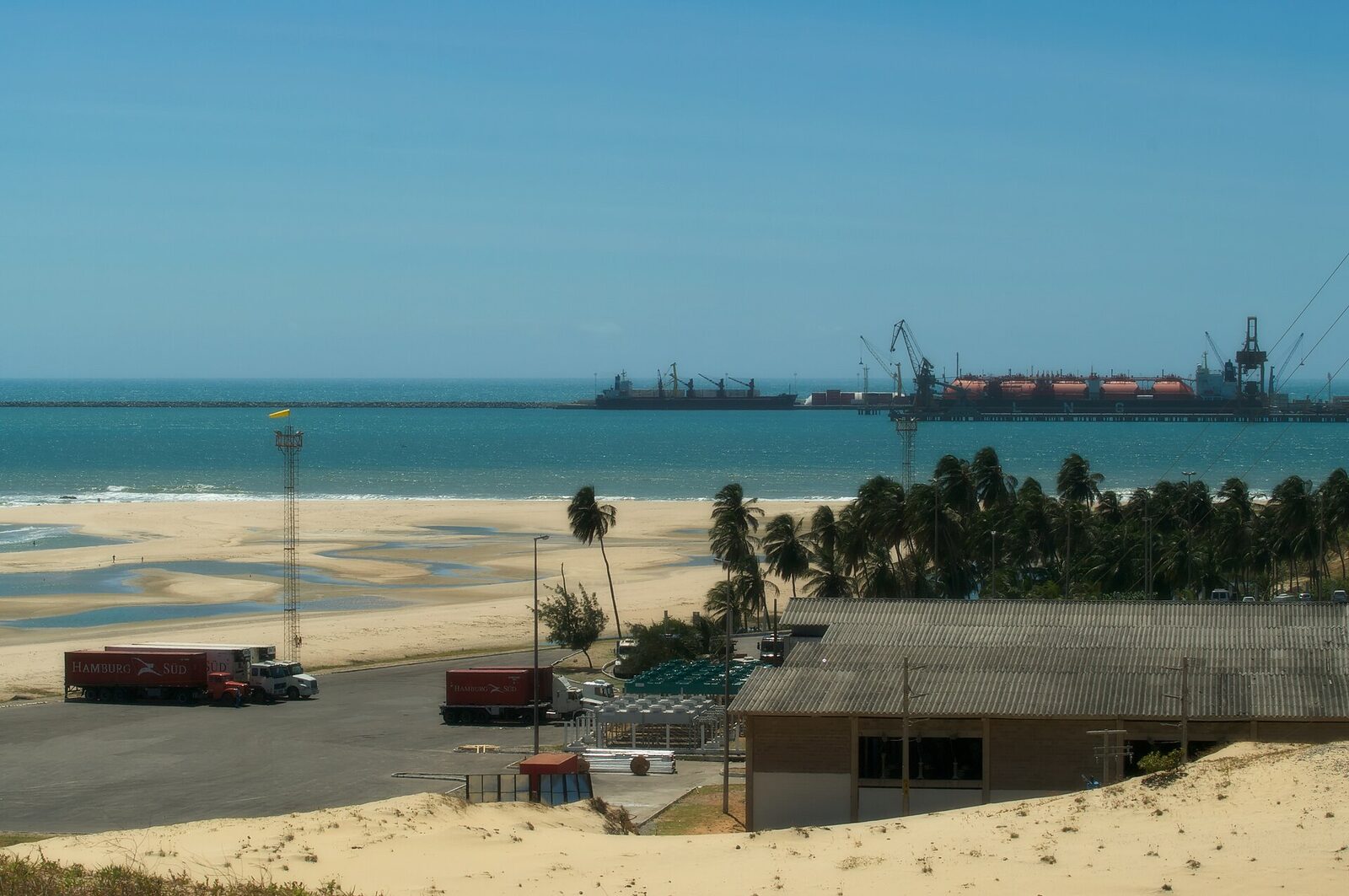
The traditional route from south India or Sri Lanka to Turkey via the Suez Canal takes 20-27 days. Since late 2023, Red Sea disruption has forced many services around the Cape of Good Hope, extending transit to 35+ days and adding USD 3,000-4,000 per container in surcharges and delays.[6] As of September 2026, the return to Suez is partial and service-by-service.
From Brazil to Turkey
There is no direct container service from Pecem to Turkey. The route runs Pecem to Algeciras (approximately 6 days), then feeder service to Mersin, for a total transit of 18-28 days.[5] The route does not pass through the Suez Canal or the Red Sea at any point, eliminating that disruption risk entirely.
| Route | Transit (days) | Freight low (USD/t) | Freight high (USD/t) | Suez exposure |
|---|---|---|---|---|
| India → Turkey (Suez) | 20-27 | 135 | 243 | Yes |
| India → Turkey (Cape) | 35+ | Higher | Higher | No (but +10-14 days) |
| Brazil → Turkey (Pecem → Algeciras → Mersin) | 18-28 | 109 | 207 | No |
Freight ranges are approximate and subject to carrier, season and contract. Brazil saves USD 26-39/t on freight vs India.[5][6][12]
Shipping lines at Pecem
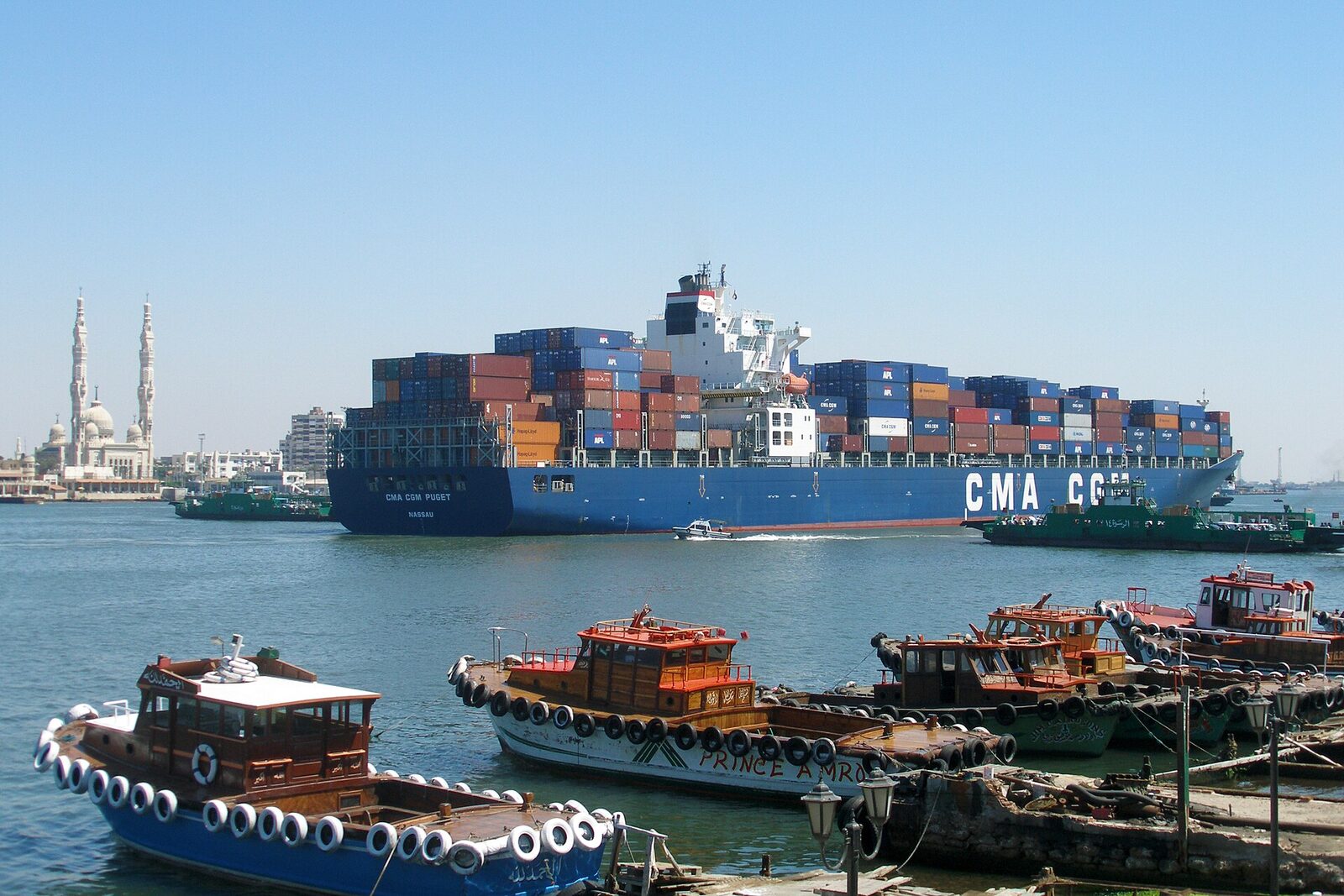
The Port of Pecem is served by four major container lines: Maersk (48 % of calls), MSC (41 %), Hapag-Lloyd (6 %) and CMA CGM (5 %).[5] Arkas, a Turkish shipping line, also operates Mediterranean services that connect with Pecem feeders via Algeciras, providing a direct commercial link to the Turkish market.
07 · Brazil's competitive position.
| Factor | India | Brazil |
|---|---|---|
| FOB price (USD/t) | ~460 | ~715 |
| Freight to Turkey (USD/t, low-high) | 135-243 | 109-207 |
| Estimated landed cost (USD/t) | ~724 | ~940 |
| Landed premium | - | ~30 % |
| Monsoon supply disruption | Jun-Dec (SW + NE monsoon) | None (dry season Jun-Dec) |
| Transit to Turkey (days) | 20-27 (Suez) / 35+ (Cape) | 18-28 |
| Suez / Red Sea risk | Yes | No |
FOB prices are approximate mid-2026 market levels. Landed cost = FOB + midpoint freight. India FOB per Volza/industry; Brazil FOB per Carve export programme.[5][6][12]
Counter-seasonal supply
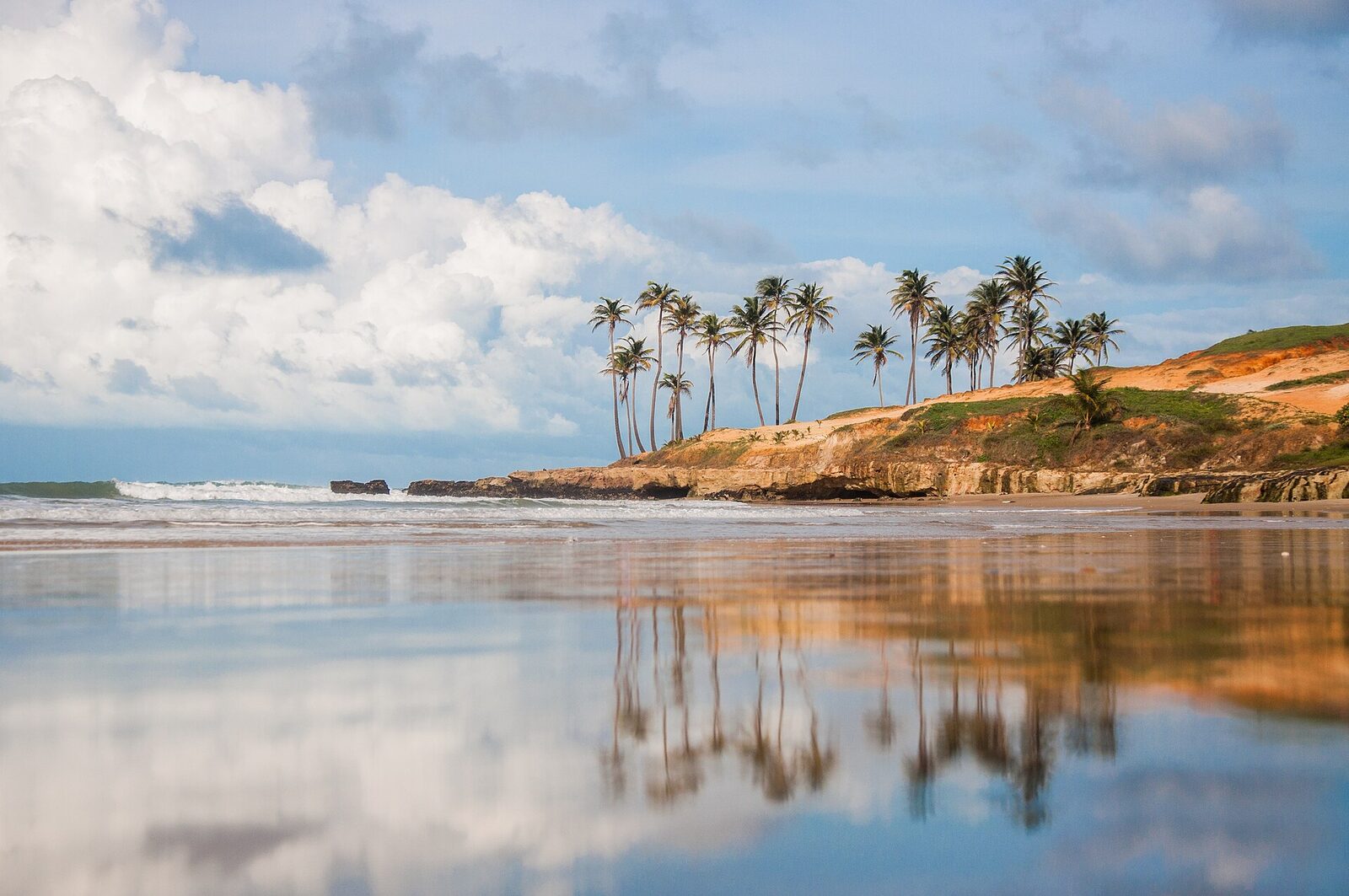
Brazil's harvest in Ceara peaks from September to February, which is precisely when India's south-west monsoon (June-September) and Tamil Nadu's north-east monsoon (October-December) constrain Asian supply. A Turkish buyer who sources from both India and Brazil can maintain year-round supply continuity without building excessive inventory during the monsoon window.
Freight advantage
The Pecem-to-Mersin route saves USD 26-39 per tonne on freight compared with India-to-Turkey, and eliminates Suez Canal exposure. For a buyer taking two containers per month, this adds up to USD 12,000-18,000 per year in freight savings on a 24-container programme.[5][12]
Landed-cost premium
Brazilian coir carries a ~30 % landed-cost premium over Indian coir (approximately USD 940/t vs USD 724/t), driven by the higher FOB price.[12] The premium reflects the cost of processing dry inland husk that is not retted, which produces lower starting EC but at a higher unit cost than retted Asian husk. For buyers who value supply security, lower salt content and Suez-independent logistics, the premium buys a different risk profile rather than a different product.
08 · Product specifications for Turkey.
Block format
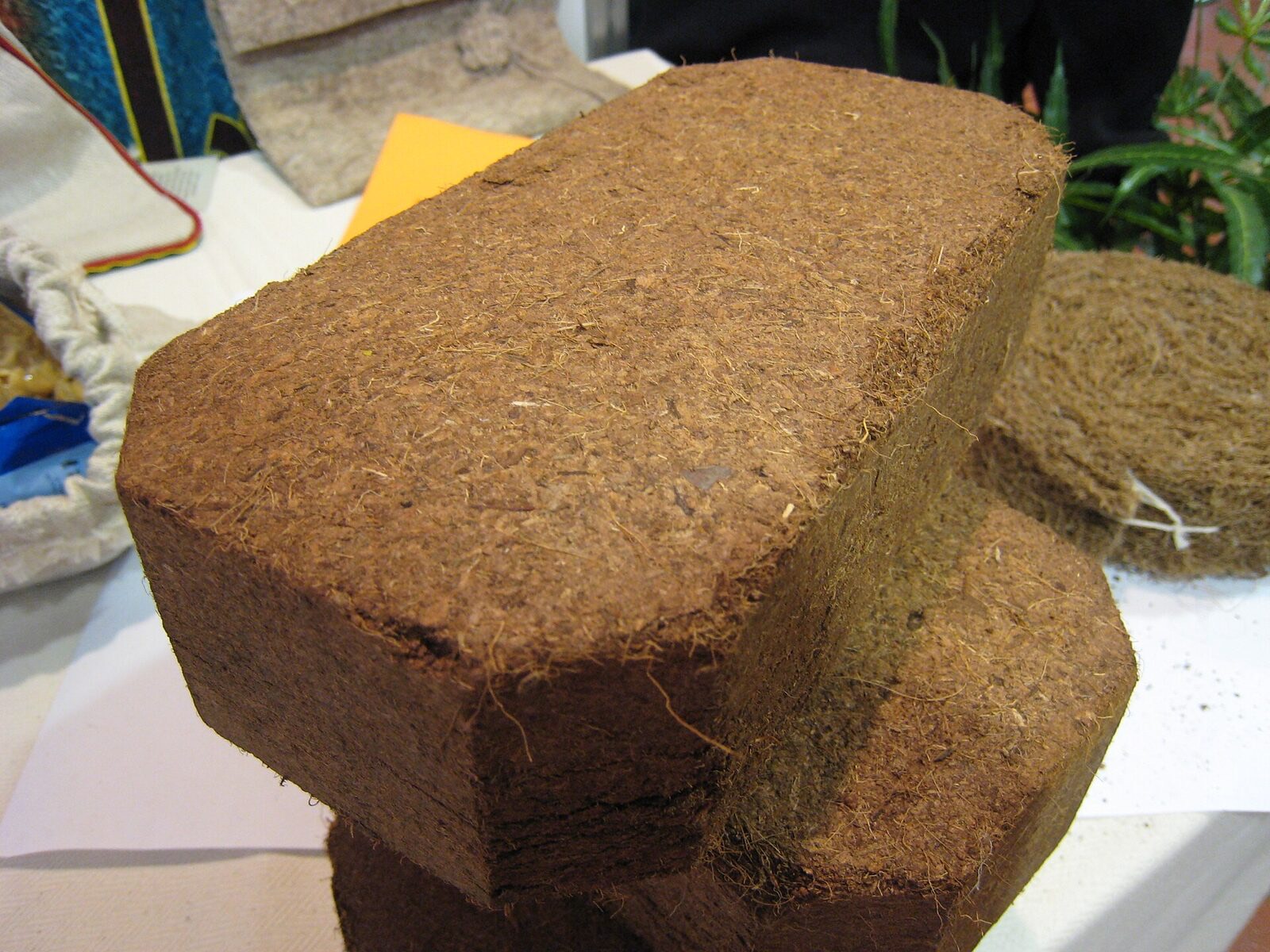
The standard export format is the 5 kg compressed block, 30 x 30 x 14 cm, yielding at least 65 litres of loose coco peat when hydrated. A 40-foot high-cube container loads 20-22 pallets, approximately 20-26 tonnes net depending on pallet height and road weight limits. Pallets are ISPM-15 treated.[7]
Quality parameters
| Parameter | Specification | Method / notes |
|---|---|---|
| EC (1:5 extract) | < 0.5 mS/cm | Buffered grade; washed grade < 1.0 |
| pH | 5.5-6.5 | 1:5 extract |
| Moisture | < 18 % | Oven-dry weight basis |
| Expansion | ≥ 13 L/kg | ≥ 65 L per 5 kg block |
| Sand and impurities | < 2 % | By weight |
Specifications are typical for professional greenhouse use in Turkey. EC below 0.5 mS/cm (buffered) is the most common request from Turkish importers of record.[7][12]
Crop-specific requirements
| Crop | Preferred format | Key requirement |
|---|---|---|
| Tomato (soilless) | Grow slabs, 5 kg blocks | EC < 0.5; high expansion; 1-2 season durability |
| Pepper (soilless) | Grow slabs, 5 kg blocks | EC < 0.5; good drainage; consistent particle size |
| Cucumber | 5 kg blocks, grow bags | EC < 0.7; fast rewetting |
| Strawberry (table-top) | Grow bags | EC < 0.5; fine-to-medium particle; high water-holding |
| Seedling production | Fine coir pith, loose or briquettes | EC < 0.5; uniform particle < 2 mm; low dust |
Format and quality requirements based on standard professional practice for Turkish greenhouse operations.[7][12]
09 · Frequently asked questions.
How big is Turkey's coir market?
Turkey's greenhouse horticulture market is valued at USD 472.1 million in 2025 and projected to reach USD 1,009.7 million by 2034, growing at 8.55 % CAGR (IMARC 2026). The coir substrate segment is estimated at 5,000-9,000 tonnes per year based on shipment counts, serving professional greenhouses, hobby gardening, seedling nurseries and berry production. Protected cultivation covers approximately 83,000 hectares (FAO/TUIK).[1][2][3][12]
What is the import duty on coir in Turkey?
The import duty on coir pith and coir products entering Turkey under GTIP 1404.90.00.99.19 is 0 %. KDV (value-added tax) of 20 % applies but is recoverable for registered businesses. There are no anti-dumping duties or quantitative restrictions on coir imports from Brazil.[4]
How long does shipping take from Brazil to Turkey?
Shipping from Pecem (Ceara, Brazil) to Mersin (Turkey) takes 18-28 days via Mediterranean transshipment, typically through Algeciras. There is no direct Pecem-Turkey service. The route does not pass through the Suez Canal or Red Sea. From India, the Suez route takes 20-27 days, but Cape rerouting extends this to 35+ days.[5][6]
Why would a Turkish buyer source coir from Brazil instead of India?
Brazil offers counter-seasonal supply: the Brazilian harvest peaks September to February, when India and Sri Lanka are monsoon-constrained. The Pecem-to-Mersin route avoids Suez and Red Sea disruption risk entirely. Freight from Brazil is USD 26-39 per tonne cheaper than from India. However, Brazilian FOB prices are higher (approximately USD 715/t vs USD 460/t from India), resulting in a landed-cost premium of about 30 %.[5][6][12]
What quality standards do Turkish greenhouse growers require?
Turkish professional greenhouse growers typically specify: EC below 0.5 mS/cm (1:5 extract) for buffered grade, pH 5.5-6.5, moisture below 18 %, expansion of at least 13 L/kg (65 litres per 5 kg block), and sand content below 2 %. The standard format is the 5 kg compressed block, 30 x 30 x 14 cm.[7][12]
Which crops drive coir demand in Turkey?
Tomato production accounts for 35-40 % of Turkey's greenhouse area, followed by pepper (15-20 %), cucumber (12-15 %), strawberry (5-8 %) and cut flowers (5-8 %). Soilless cultivation, where coir is most used, covers an estimated 15-25 % of total greenhouse area. Antalya alone produces USD 441.3 million in vegetable exports.[1][2][12]
MARKET INTELLIGENCE BY REGION
Coir markets we cover
Sourced market data and import guides for the destinations we serve from Pecém, Brazil.
For the worldwide picture, see our Global Coir Market overview.
10 · Sources.
- IMARC Group, Turkey Greenhouse Horticulture Market: Industry Trends, Share, Size, Growth, Opportunity and Forecast 2026-2034 (2026). Market value USD 472.1 M (2025), CAGR 8.55 %, vegetable exports USD 980 M (2024), Antalya exports USD 441.3 M.
- FAO / TUIK (Turkish Statistical Institute), Turkey protected cultivation area statistics. Approximately 83,000 ha total.
- Volza trade data, Turkey coir import shipments. Approximately 146 shipments/year recorded.
- Turkish customs tariff schedule, GTIP 1404.90.00.99.19. Import duty 0 %; KDV 20 % (recoverable).
- APM Terminals Pecem, shipping lines and published transit times — apmterminals.com/en/pecem. Maersk 48 %, MSC 41 %, Hapag-Lloyd 6 %, CMA CGM 5 %. Pecem to Algeciras ~6 days.
- FreshPlaza, "Vessel shortages disrupt cocopeat exports from India and Sri Lanka" — freshplaza.com. Red Sea rerouting, surcharges, transit extensions.
- Blok, C., Verhagen, J. & Wesemael, W. (2021). "Trends in rooting media in Dutch horticulture during the period 2001-2050", Acta Horticulturae 1305: 341-355. Block specifications, expansion rates, quality parameters.
- IBGE, Producao Agricola Municipal 2024, SIDRA table 1613 — sidra.ibge.gov.br/tabela/1613. Ceara coconut production.
- Governo do Ceara / CIPP, 24 February 2026, Porto do Pecem 2025 results (706,509 TEU, +27 %) — ceara.gov.br.
- EU peat policy sources: Dutch Covenant on the Environmental Impact of Potting Soil and Substrates (2022); BMEL/BMLEH Peat Use Reduction Strategy (Germany); DEFRA peat consultation (UK).
- World Bank, Dikili Organized Industrial Zone project documentation. 300 ha, USD 65 M, 50 units, 80,000 t/yr target.
- Industry estimates for Turkey coir consumption segments, FOB prices, freight ranges and regional greenhouse areas. Low-confidence figures are marked as estimates in the text.