01 · Market overview: Europe's substrate capital.
The Netherlands produces approximately 7.5 million m³ of substrates annually, the largest volume in the European Union. The VPN (Vereniging Potgrond- en Substraatfabrikanten Nederland) represents around 20 member companies accounting for over 95 % of Dutch substrate production.[4] Coir volume in Dutch substrates stands at approximately 1.1 million m³ per year, a 16.9 % share. Peat remains dominant at approximately 4 million m³ per year.[5]
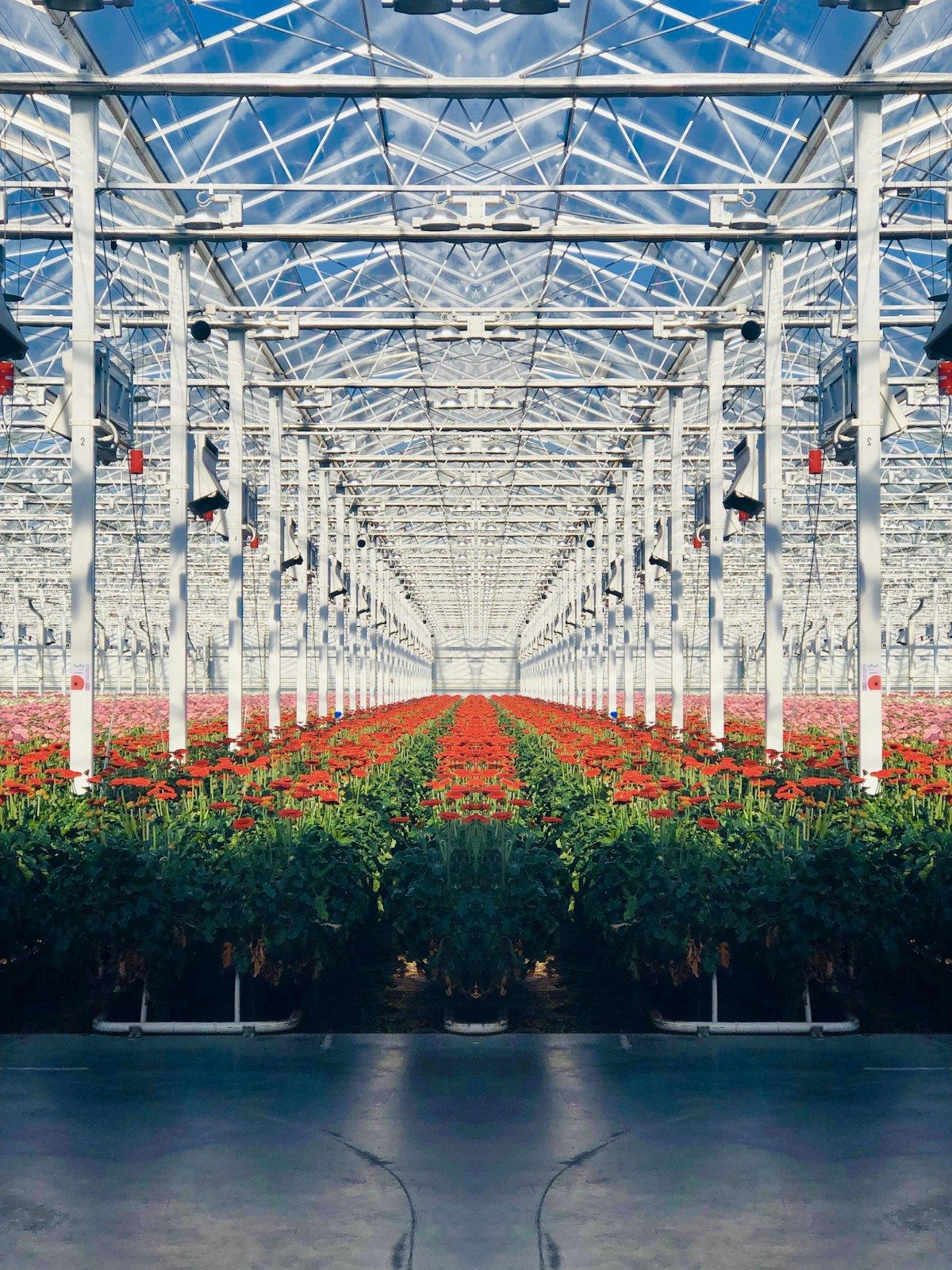
Netherlands cocopeat imports grew 78.04 % between 2023 and 2024 according to 6W Research. The compound annual growth rate (CAGR) for 2020–2024 was 8.32 %, with a projected CAGR of 4.42 % through 2027.[1] As of 2025, 42 known importers source coir from 25 countries.[3] The top three importers control 69 % of pith imports: Dutch Plantin with 38 % global market share, Van der Knaap with 11 % and Legro with 8 %.[3]
Market size indicators
| Metric | Value | Source |
|---|---|---|
| Annual substrate production | ~7.5 M m³ | AIPH / VPN / Frontiers |
| Coir volume in substrates | ~1.1 M m³/yr (16.9 %) | Frontiers |
| Peat volume in substrates | ~4 M m³/yr | Frontiers |
| Cocopeat import volume | ~80,000 t/yr | Volza / 6W Research |
| Import growth 2023–2024 | +78.04 % | 6W Research |
| CAGR 2020–2024 | 8.32 % | 6W Research |
| Projected CAGR through 2027 | 4.42 % | 6W Research |
| Known importers | 42 from 25 countries | Volza |
02 · Import volumes and origins: India dominates, diversification ahead.
The Netherlands takes 32.95 % of India's total pith exports, making it the single largest destination for Indian coir pith worldwide.[3] India supplies 60 to 70 % of Dutch coir pith imports, followed by Sri Lanka at 20 to 25 %. Smaller volumes arrive from Belgium (re-exports), Côte d'Ivoire, Indonesia and Vietnam.
Major Indian suppliers to the Netherlands
| Supplier | Market share | Notes | Source |
|---|---|---|---|
| Vaighai Agro Products | 14.57 % | Largest single Indian exporter to NL | Volza |
| Dutch Plantin Coir India | Significant | Vertically integrated; Dutch Plantin's own Indian processing | Volza |
| Shakti Cocos | Significant | JV partner with HortiDaily; supplies professional grade | Volza / HortiDaily |
| Yuva India Exports | Notable | Regular exporter to Dutch substrate market | Volza |
| Imik Technologies | Notable | Active exporter to Netherlands | Volza |
Supply concentration is high. Diversification pressure is increasing as the peat phase-out covenant drives demand beyond India's available volume.
The concentration of supply in India and Sri Lanka creates logistics risk, particularly through the Suez Canal. Red Sea disruptions in 2024–2025 forced rerouting via the Cape of Good Hope, adding 7 to 14 days and increasing freight costs. This has accelerated interest in Atlantic-route suppliers such as Brazil.[19]
03 · Buyer segments: from global substrate producers to greenhouse growers.
Tier 1: dominant importers (>10,000 t/yr)
Dutch Plantin is the world's largest coir processor, holding 38 % of global pith import market share with 826 recorded shipments. Headquartered in Made (Noord-Brabant), the company operates processing plants in India and Sri Lanka, supplying coir pith, chips and grow bags to professional growers worldwide.[7]
Kekkilä-BVB (a Neova Group company) is Europe's largest growing media producer with revenue exceeding EUR 300 million. It produces peat, coir and blended substrates from facilities in Finland, Estonia and the Netherlands.[8]
Van der Knaap / Premier Tech is the second-largest Dutch coir importer at 11 % market share. Since 2021, Van der Knaap has been part of the Canadian Premier Tech group, combining Dutch substrate expertise with Premier Tech's global distribution.[9]
Legro is the dominant fiber importer, accounting for 89 % of Netherlands coir fiber imports. Legro also holds 8 % of pith imports, making it the third-largest pith buyer.[10]
Tier 2: major players
Klasmann-Deilmann is the world's largest peat substrate producer, headquartered in Geeste (Germany) but with major Dutch operations. The company is actively diversifying into coir and other renewable raw materials in line with the peat phase-out covenant.[11]
Jiffy Group (headquartered in Zierikzee, Netherlands) has estimated revenue of approximately USD 502.5 million, producing propagation products including Jiffy-7 pellets, growing blocks and substrate blends with coir components.[13]
Shakti Cocos is an Indian-Dutch joint venture announced in cooperation with HortiDaily, supplying professional-grade coir to the Dutch greenhouse sector.[12]
Tier 3: specialist and regional
Jongkind Substrates, RYSA Substrates, Agaris, Botanicoir and Comgoed operate as specialist substrate producers, blenders or importers, each serving specific segments of the Dutch and Northern European market.
Tier 4: distribution
Royal Brinkman is Europe's largest horticultural distributor, supplying substrates, crop protection, climate control and other inputs to professional growers across Europe. Royal Brinkman distributes coir products from multiple producers.
| Company | Role | Market share / scale | Source |
|---|---|---|---|
| Dutch Plantin | World's largest coir processor | 38 % global pith share, 826 shipments | Volza |
| Kekkilä-BVB | Europe's #1 growing media producer | > EUR 300 M revenue | Company info |
| Van der Knaap / Premier Tech | #2 Dutch pith importer | 11 % share | Volza |
| Legro | #1 fiber importer, #3 pith | 89 % NL fiber imports, 8 % pith | Volza |
| Klasmann-Deilmann | World's largest peat producer, diversifying | Global scale | Company info |
| Jiffy Group | Propagation and substrates | ~USD 502.5 M revenue | Company info |
| Shakti Cocos | Indian-Dutch JV, professional coir | Growing NL presence | HortiDaily |
| Royal Brinkman | Europe's largest horticultural distributor | Distribution, not import | Company info |
04 · Regional clusters: Westland, Venlo and the flower auction.
Westland
The Westland municipality in South Holland concentrates approximately 1,898 hectares of greenhouses across 783 companies, representing nearly 50 % of the total Dutch greenhouse area. Primary crops: tomatoes, bell peppers and cucumbers. Westland is the highest-density greenhouse cluster in the world.[5]
Venlo / Limburg
The Venlo region in Limburg province hosts large-scale vegetable production, including several of Europe's largest single-site greenhouse operations. The Venlo-type greenhouse design, developed in this region, is the global standard for commercial glasshouses.
Noord-Holland
The Noord-Holland province is a centre for ornamentals and young plant production. Nurseries in this region are significant consumers of coir-based propagation substrates.
Aalsmeer and Royal FloraHolland
Aalsmeer is the global epicentre of the flower trade. Royal FloraHolland operates the world's largest flower auction with approximately 6,000 grower-members, handling 43 million flowers and plants per day and accounting for approximately 60 % of global flower trade.[5] Coir substrates are used extensively in potted plant and cut flower production feeding this auction.
Berry growers
Strawberry tabletop cultivation on coir is a growing segment in the Netherlands. Blueberry and raspberry production on coir slabs and containers is expanding, driven by consumer demand and the suitability of coir for berry substrates.
05 · Logistics from Brazil: 14 to 18 days to Rotterdam.
The Port of Rotterdam is Europe's largest container port, handling approximately 15 million TEU annually. It is the primary gateway for coir imports into the Netherlands and Northern Europe. The Port of Rotterdam has been a partner of APM Terminals Pecem since 2018.[17]
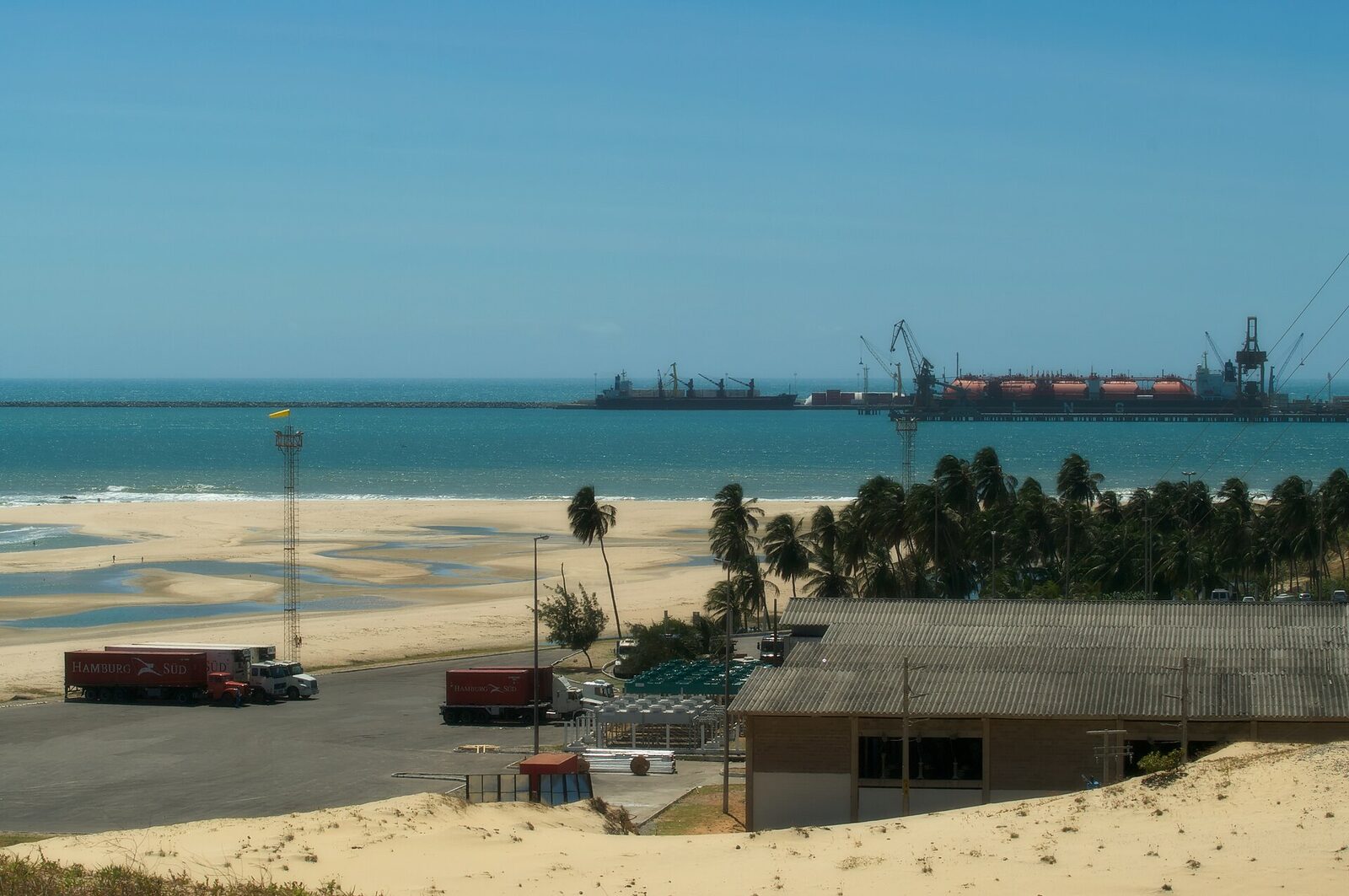
| Route | Transit time | Distance | Red Sea exposure | Source |
|---|---|---|---|---|
| Pecem to Rotterdam | 14–18 days | ~4,500 nm | No | APM Terminals |
| India (JNPT) to Rotterdam | 18–22 days | ~6,200 nm | Yes (Suez) | Industry |
| Sri Lanka (Colombo) to Rotterdam | ~25 days | ~6,500 nm | Yes (Suez) | Industry |
| India/Sri Lanka via Cape (rerouted) | 30–40 days | ~9,000+ nm | No (avoids it) | Atlas Institute |
Red Sea disruptions
Since late 2023, Houthi attacks in the Red Sea and Gulf of Aden have caused 190+ attacks on commercial vessels, forcing major container lines to reroute via the Cape of Good Hope. This adds 7 to 14 days to Asia–Europe transit and caused container freight costs to surge nearly 5 times above normal rates during peak disruption periods.[19]
06 · Pricing.
| Product | Price range | Notes | Source |
|---|---|---|---|
| Professional washed/buffered coco peat | EUR 80–130/m³ | Delivered in EU, professional grade | Industry / IndexBox |
| Standard professional peat substrate | USD 50–80/yd³ (~EUR 55–90/m³) | White peat based; for price comparison | Industry |
| RHP-certified specialty low-EC coir | +25 % premium | Over standard professional grade | Industry |
| Retail potting soils (with coir) | EUR 3–7/bag (40 L) | Consumer garden centre segment | Industry |
Peat shortage compounding demand
White peat harvest in 2025 reached only 25 to 35 % of normal volume across the Baltic states and Scandinavia, the third consecutive year of below-average harvests due to wet weather conditions. This structural peat shortage is compounding demand for coir as a replacement material.[15]
Simultaneously, China's demand for coir has surged as Chinese greenhouse expansion competes for the same limited global coir supply, further tightening the market for European buyers.[16]
07 · Specifications and certifications.
RHP certification
RHP certification is mandatory for the Dutch professional substrate market. It is the de facto quality standard for growing media in Northern Europe, covering quality, cleanliness, traceability and increasingly sustainability. Approximately 75 companies worldwide hold RHP certification.[14]
EC requirements by grade
| Grade | EC (mS/cm, 1:1.5 extract) | Application |
|---|---|---|
| Super washed | < 0.5 | Premium greenhouse, propagation |
| Premium | 0.2–0.4 | High-value vegetable crops |
| Standard professional | 0.5–0.8 | General greenhouse use |
| Buffered | < 0.5 post-buffering | All professional applications |
Dutch professional buyers require both washing AND buffering. Unbuffered coir, even if low-EC, is not accepted for professional greenhouse use. Source: CocoSupplier, RHP.
RPC (Responsibly Produced Coir)
The RPC scheme, administered by RHP, adds tiered social and environmental requirements to coir certification. Requirements cover working conditions, environmental management and traceability from farm to end user. RPC is increasingly expected by Dutch and Northern European buyers alongside RHP quality certification.[14]
EU Fertilising Products Regulation (FPR) 2019/1009
The EU FPR establishes harmonised rules for fertilising products including growing media. Coir placed on the EU market as a standalone growing medium falls under PFC 4 (Growing Medium) and may carry CE marking. This regulation is expected to become the primary market access requirement for coir imports into the EU.
Compression and packaging
| Format | Typical dimensions | Compression ratio |
|---|---|---|
| 5 kg block | 30 × 30 × 12 cm | 5:1 to 8:1 |
| 650 g brick | 20 × 10 × 5 cm | 5:1 to 7:1 |
| 25 kg bale | Variable | 3:1 to 5:1 |
| Grow bags | 100 × 20 × 10 cm | N/A (pre-filled) |
| Grow slabs | 100 × 15 × 7.5 cm | N/A (pre-filled) |
Carve supplies all three grades — Natural, Washed and Buffered — from Brazilian dry husk that is not retted. Specifications, EC reports and product details are on the coir pith, coir fiber and husk chips pages.
08 · Frequently asked questions.
How big is the Netherlands coir market?
The Netherlands imports approximately 80,000 tonnes of cocopeat per year, making it the second-largest coir importer globally after the United States. Dutch substrate production totals around 7.5 million cubic metres annually, the largest in the EU, with coir accounting for approximately 16.9 percent (1.1 million cubic metres per year). Sources: Volza, 6W Research, AIPH, VPN, Frontiers.
What is the Dutch peat phase-out covenant?
The Dutch Covenant on the Environmental Impact of Potting Soil and Substrates is a binding agreement signed in 2022. Targets: 35 percent renewable raw materials in professional substrates by 2025, 50 percent by 2030 and 90 percent by 2050. The professional market stood at 28 percent renewable in 2022. The hobby market was already at 60 percent. Coir is the primary replacement candidate. Source: Dutch Covenant.
What is RHP certification?
RHP is the de facto quality standard for professional substrates in Northern Europe. It covers quality, cleanliness, traceability and sustainability. RHP certification is mandatory for supplying the Dutch professional market. Approximately 75 companies worldwide hold RHP certification. The RPC (Responsibly Produced Coir) scheme adds tiered social and environmental requirements. Source: RHP Foundation.
Who are the largest coir importers in the Netherlands?
The top three importers control 69 percent of pith imports: Dutch Plantin with 38 percent of global market share (826 shipments), Van der Knaap / Premier Tech with 11 percent and Legro with 8 percent (plus 89 percent of Netherlands fiber imports). Other major players include Kekkila-BVB, Klasmann-Deilmann, Jiffy Group and Shakti Cocos. Sources: Volza, 6W Research.
What is the transit time from Brazil to Rotterdam?
From the Port of Pecem in Ceara, Brazil, to Rotterdam the transit is 14 to 18 days, approximately 4,500 nautical miles via the Atlantic with no Red Sea exposure. India to Rotterdam takes 18 to 22 days via Suez (6,200 nautical miles) and Sri Lanka to Rotterdam takes approximately 25 days (6,500 nautical miles), both exposed to Suez Canal disruptions. When rerouted via the Cape of Good Hope, Asia to Rotterdam extends to 30 to 40 days. Sources: APM Terminals Pecem, Port of Rotterdam.
What specifications do Dutch buyers require?
Dutch professional buyers require washed AND buffered coir with EC below 0.5 mS/cm (super washed below 0.5, premium 0.2 to 0.4 mS/cm). RHP certification is mandatory. Full traceability from farm to end user is expected. The EU Fertilising Products Regulation 2019/1009 (PFC 4 Growing Medium, CE marking) applies to products placed on the EU market. Sources: RHP Foundation, CocoSupplier, EU FPR.
MARKET INTELLIGENCE BY REGION
Coir markets we cover
Sourced market data and import guides for the destinations we serve from Pecém, Brazil.
For the worldwide picture, see our Global Coir Market overview.
09 · Sources.
- 6W Research, Netherlands Coco Coir Market — market size, growth rates, import volumes.
- 6W Research, Netherlands Coco Peat Market 2025–2031 — CAGR projections, segment analysis.
- Volza, Coir Pith Buyers & Importers in the Netherlands — volza.com — shipment counts, supplier shares, importer identification.
- AIPH / VPN / Frontiers in Horticulture, Dutch substrate production volumes and industry structure.
- Frontiers in Horticulture, "Future Directions of Global Growing Media" — substrate composition, coir share, greenhouse area data, Royal FloraHolland.
- Dutch Covenant on the Environmental Impact of Potting Soil and Substrates, 2022 — peat phase-out targets, renewable material definitions, signatory commitments.
- Dutch Plantin, company information — dutchplantin.com — market share, processing capacity, global operations.
- Kekkilä-BVB (Neova Group), company information — kekkila-bvb.com — revenue, product range, European operations.
- Van der Knaap Group / Premier Tech — vanderknaap.info — import share, Premier Tech acquisition.
- Legro Group — legro.nl — fiber import dominance, pith market share.
- Klasmann-Deilmann, "Less Environmental Impact" / Cocos Products — klasmann-deilmann.com — peat diversification strategy, coir product range.
- Shakti Cocos / HortiDaily, cooperation announcement — hortidaily.com — Indian-Dutch joint venture, professional coir supply.
- Jiffy Group — jiffygroup.com — revenue estimate, propagation products, substrate blends.
- RHP Foundation, Certified Products / Coir Products / RPC — rhp.nl — certification requirements, number of certified companies, RPC scheme.
- FloralDaily, "Historic peat shortage continues" — floraldaily.com — white peat harvest shortfall data, 25–35 % of normal.
- HortiDaily, "Raw material shortages in substrate market" — hortidaily.com — China demand surge, supply competition.
- Port of Rotterdam, Pecem Partner Port — portofrotterdam.com — partnership since 2018, TEU volumes.
- APM Terminals Pecem, Shipping Lines — apmterminals.com — transit times, service connections to Europe.
- Red Sea shipping crisis — Atlas Institute for International Affairs; multiple shipping industry sources — attack counts, rerouting data, freight cost increases.
- IndexBox, Coir-Based Growing Mixes Market — indexbox.io — European market sizing, price ranges.
- Market Data Forecast, Coco Coir Market — marketdataforecast.com — global and regional growth projections.
- CocoSupplier, Coco Peat EC and pH Spec Guide — cocosupplier.com — EC grade definitions, buffering requirements, quality parameters.