01 · Market overview: 76,600 ha of greenhouses and growing.
Spain has 76,600 hectares of protected cultivation, the largest greenhouse area in Europe and the second largest in the world after China.[1] The Spanish greenhouse horticulture market was valued at USD 534.88 million in 2024, projected to reach USD 1,232.97 million by 2033 at a CAGR of 8.71 %.[2] Spain imports an estimated 70,000+ tonnes per year of coir products. The country is the #5 destination for Indian coir pith exports, receiving 5.82 % of total shipments (1,554 shipments).[7]
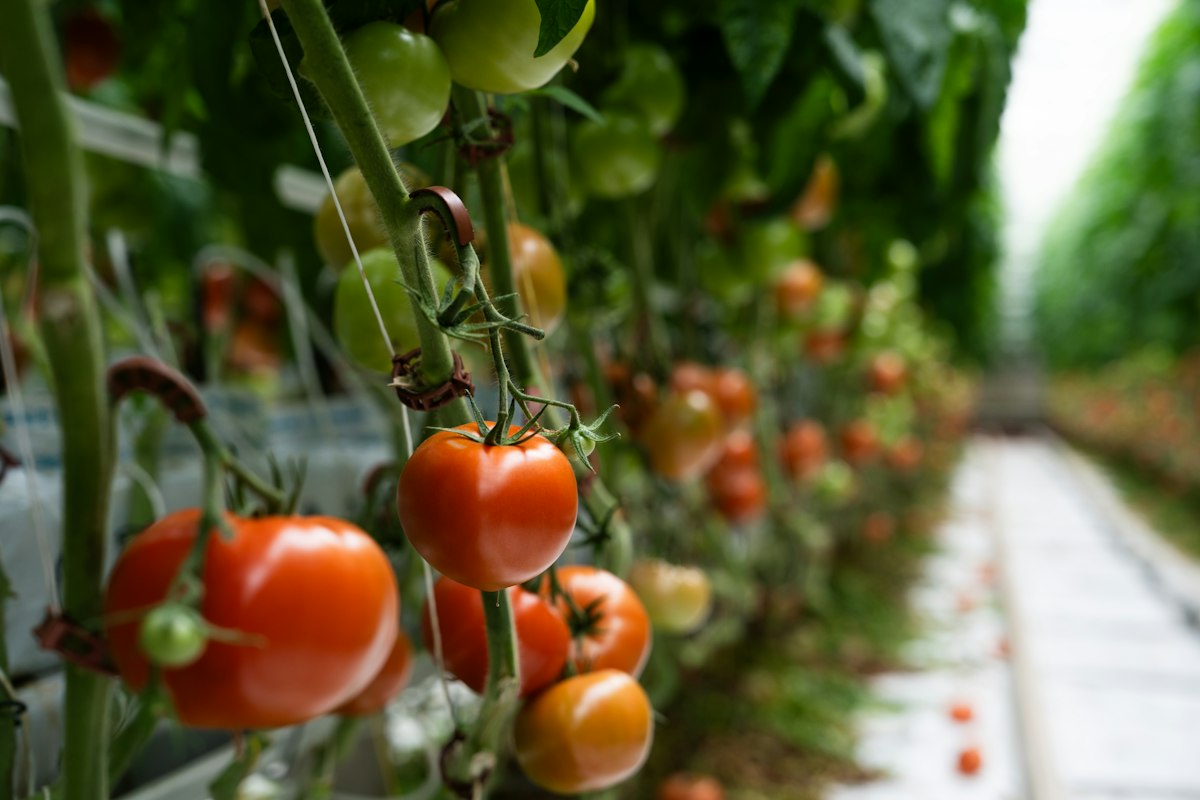
Spain is the EU's #1 country by organic farmland: 2.94 million hectares, representing 12.31 % of total agricultural area.[6] Three regional pillars drive coir substrate demand: Almeria (greenhouse vegetables: tomato, pepper, cucumber), Huelva (berries: strawberry, blueberry, raspberry) and Murcia (salad crops and citrus). Each cluster has distinct crop profiles, substrate requirements and supply chain patterns.
02 · Import volumes and origins.
Spain receives 5.82 % of India's coir pith exports, totaling 1,554 shipments. India-to-Spain coir trade breaks down as: coir pith USD 13.05 million, cocopeat USD 2.71 million, coir fibre USD 480,000.[7] The loading port of Tuticorin handles 98.5 % of India-to-Spain coir shipments. Peak season is February to April, aligning with Spain's pre-growing season preparations.
FOB India prices for Spain-bound shipments
| Product | FOB price | Notes | Source |
|---|---|---|---|
| Unwashed coir pith blocks | USD 0.20–0.25/kg | Lowest grade, requires washing by buyer | Zauba |
| Washed + buffered coir pith | USD 0.43/kg | Ready for professional use, EC < 0.5 | Zauba |
| Coir grow bags | USD 0.33–0.36/kg | 100 × 20 × 12 cm standard format | Zauba |
Sri Lanka is the #2 supplier to Spain, specializing in premium buffered substrate and grow bags. The Netherlands functions as a re-export hub: Dutch companies (Dutch Plantin, Klasmann-Deilmann) import raw coir from India and Sri Lanka, process and repackage it, and sell to Spanish buyers at a 2 to 4 times markup over FOB origin prices.[15]
03 · Buyer segments: manufacturers, distributors and cooperatives.
Tier 1: Manufacturers with Spanish presence
Projar Group is Spain's largest coir substrate company, with EUR 78 million or more in revenue. Projar operates a factory at the Port of Almeria and owns a processing facility in Sri Lanka, giving it control of both ends of the supply chain. The company serves Almeria's greenhouse vegetable sector directly.[13]
Pelemix España (Israel-origin) operates a manufacturing plant in Murcia with a capacity of 2,300 containers per year. Pelemix produces grow bags and loose cocopeat for the Spanish and wider Mediterranean market. The Murcia location places it within 300 km of all three major growing clusters.[14]
Tier 2: International distributors
Several multinational substrate companies serve Spain through distribution networks: Dutch Plantin (Netherlands, grow bags and cocopeat), Klasmann-Deilmann (Germany, peat-coir blends), Galuku (Sri Lanka, grow bags), Jiffy Group (Norway, propagation and substrate) and BVB/Kekkilä (Finland, professional substrates).[15][16]
Key cooperatives
Spain's cooperative structure concentrates purchasing power:
| Cooperative | Location | Scale | Notes |
|---|---|---|---|
| COEXPHAL | Almeria | 144 organizations, 11,000 growers, 33,200 ha | Largest Almeria cooperative association |
| UNICA Group | Almeria | 19 cooperatives, 5,000 growers, EUR 700M revenue | Second-largest, integrated marketing |
| Freshuelva | Huelva | 95 % of Huelva berry production | Berry sector association |
Sources: COEXPHAL, UNICA Group, Freshuelva.[17][18][12]
| Buyer | Location | Scale | Products |
|---|---|---|---|
| Projar Group | Valencia / Almeria | EUR 78M+ revenue | Grow bags, loose cocopeat, blends |
| Pelemix España | Murcia | 2,300 containers/yr capacity | Grow bags, loose cocopeat |
| Dutch Plantin | Netherlands (distributes to Spain) | 40,000 grow bags per 40 ft container | Grow bags, coir chips, cocopeat |
| Klasmann-Deilmann | Germany (Spanish distribution) | Major EU substrate producer | Peat-coir blends, growing media |
| Galuku | Sri Lanka (Spanish distribution) | Leading grow bag producer | Grow bags, coir discs |
04 · Regional clusters: Almeria, Huelva and Murcia.
Almeria: the sea of plastic
Almeria province has 33,709 hectares of greenhouses, the densest concentration of protected cultivation in the world outside China. The concentration is visible from space and has been documented by NASA Earth Observatory.[3][4][5] The municipality of El Ejido accounts for approximately 40 % of Almeria's greenhouse area, Nijar for 20 %. Total output is 2.5 to 3.5 million tonnes annually, with approximately 80 % exported. The sector employs 120,000 direct workers. Top export destinations: Germany (29.7 %), France (15 %), Netherlands (13.1 %), United Kingdom (11.3 %).
The principal crops are tomato, pepper and cucumber, grown on coir grow bags in soilless systems. Almeria's transition from soil to substrate cultivation has accelerated as water costs rise and EU food safety standards tighten. The Almeria greenhouse model is intensive, year-round production under plastic, with 2 to 3 crop cycles per year.
Huelva: Europe's berry capital
Huelva province has approximately 13,000 hectares of berry production. Strawberry occupies 6,550 ha, blueberry 4,500 ha (with 1,000 ha added in just four seasons), and raspberry 1,680 ha.[9][10] Berry exports from Huelva reached a record EUR 1.257 billion in 2024.[12] Huelva produces roughly 97 % of Spain's strawberries and a large share of EU blueberries.[11]
Nearly all blueberry production in Huelva uses coir substrate, making this the single largest coir-consuming berry region in Europe. Blueberry requires low-EC substrate (below 0.3 mS/cm) at pH 4.5 to 5.5, which matches buffered coir's natural range after calcium treatment. Strawberry growers are increasingly switching from soil to coir grow bags for improved yield consistency and water efficiency.
Murcia: salad crops and environmental compliance
The Region of Murcia exported EUR 2,504 million in fruit and vegetable products in 2018, with lettuce production at 554,971 tonnes and lemon at 353,961 tonnes.[8] The Mar Menor ecological crisis (nutrient runoff causing algal blooms in Europe's largest saltwater lagoon) has driven regulatory pressure for closed-loop cultivation systems. Substrate-based production with recirculating nutrient solution prevents nitrate leaching, making coir grow bags an environmental compliance tool in the region.
05 · Logistics from Brazil: 14 to 18 days to Valencia.
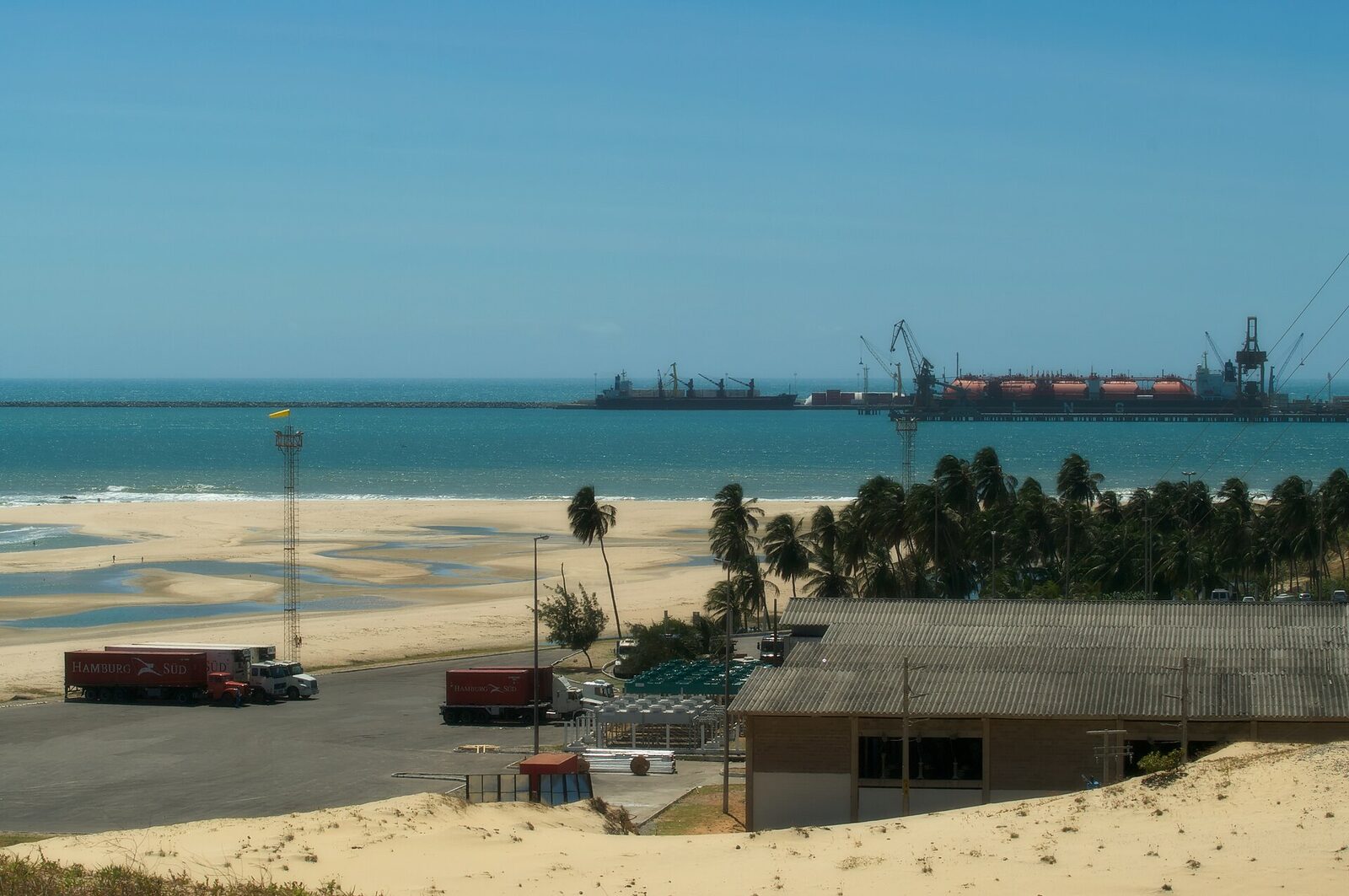
The primary entry point for Brazilian coir into Spain is the Port of Valencia, Spain's largest container port by TEU volume at 5.6 million TEUs, located approximately 500 km from Almeria by road.[19] The alternative is the Port of Algeciras, Spain's largest port by total cargo volume, located approximately 350 km from Almeria. Both ports have established container services from Brazil.
| Route | Transit time | Notes | Source |
|---|---|---|---|
| Pecem → Valencia / Algeciras | 14–18 days | Atlantic direct route | APM Terminals |
| India (Tuticorin) → Valencia | 20–25 days | Via Suez Canal | Industry standard |
| Sri Lanka (Colombo) → Valencia | 20–28 days | Via Suez Canal | Industry standard |
| Rotterdam → Spain (sea) | 3–5 days | Short-sea feeder or road 2 days | Industry standard |
Brazil's advantages for Spanish buyers
The Atlantic route from Pecem to Spain is 4 to 10 days shorter than from India or Sri Lanka via Suez. There are no Suez Canal transit fees (USD 400 to 700 per TEU saved). Brazil's coconut harvest is counter-seasonal to South Asian supply peaks, providing year-round availability. A standard 40 ft container carries approximately 40,000 grow bags (Dutch Plantin data).[15]
06 · Pricing.
Wholesale prices in Spain
| Product | Price | Notes |
|---|---|---|
| Coir grow bags (100 × 20 × 12 cm, buffered) | EUR 2.50–4.50/bag | Wholesale, delivered to farm |
| Professional washed/buffered cocopeat | EUR 80–130/m³ | Delivered EU, bulk or palletized |
| FOB India: unwashed blocks | USD 0.20–0.25/kg | Requires further processing |
| FOB India: washed + buffered | USD 0.43/kg | Ready for professional use |
| FOB India: grow bags | USD 0.33–0.36/kg | Standard 100 × 20 format |
Coir vs rockwool: cost comparison
| Parameter | Coir grow bags | Rockwool slabs |
|---|---|---|
| Purchase price | EUR 2.50–4.50/bag | EUR 3.00–5.00/slab |
| Useful lifespan | 2–3 crop cycles | 1–2 crop cycles |
| Disposal cost | ~EUR 0 (composted on-farm) | EUR 10–40/t landfill tax |
| Annual cost per hectare (est.) | EUR 1,200–2,000 | EUR 1,400–2,400 + disposal |
07 · Specifications and certifications.
Commercial grades
| Grade | EC (1:5) | Processing | Typical use |
|---|---|---|---|
| Natural Washed | < 2.0 mS/cm | Sun-dried, basic wash | Soil amendment, non-critical |
| Washed | < 1.0 mS/cm | Fresh water wash, aged | General horticulture, nursery |
| Buffered | < 0.5 mS/cm | Calcium nitrate treatment, triple wash | Professional greenhouse, berries |
Crop-specific requirements in Spain
| Crop | EC requirement | pH | Notes |
|---|---|---|---|
| Tomato | < 1.0 mS/cm | 5.5–6.5 | Almeria standard grow bag crop |
| Cucumber | < 0.8 mS/cm | 5.5–6.5 | Sensitive to sodium; buffered preferred |
| Pepper | < 1.0 mS/cm | 5.5–6.5 | Long cycle, 2–3 harvests on same bag |
| Blueberry | < 0.3 mS/cm | 4.5–5.5 | Huelva standard; lowest EC required |
| Strawberry | < 0.5 mS/cm | 5.5–6.5 | Huelva; switching from soil to substrate |
Grow bag formats
| Format | Dimensions | Volume | Crop |
|---|---|---|---|
| Standard slab | 100 × 20 × 12 cm | ~18 L expanded | Tomato, pepper, cucumber |
| Wide slab | 100 × 30 × 10 cm | ~22 L expanded | Lettuce, herbs |
| Berry bag | 100 × 20 × 15 cm | ~25 L expanded | Blueberry, strawberry |
| Open-top pot | Various (10–50 L) | 10–50 L | Nursery, ornamental |
EU regulatory framework
The EU Fertilising Products Regulation (FPR) 2019/1009 classifies coir substrate as PFC 4 (Growing Medium). CE marking allows free movement across all EU member states. Module A self-certification applies: the manufacturer declares conformity based on internal production control. No notified body is required.[21]
Phytosanitary requirements: processed coir (dried, washed, compressed) typically does not require a phytosanitary certificate for EU import. Raw coconut husk does. Spain's Ley 7/2022 on waste further incentivizes coir over non-biodegradable alternatives through landfill taxation.
Carve supplies all three grades — Natural, Washed and Buffered — from Brazilian dry husk that is not retted. Specifications, EC reports and product details are on the coir pith, coir fiber and husk chips pages.
08 · Frequently asked questions.
How big is the Spain coir market?
Spain imports an estimated 70,000 or more tonnes per year of coir products. The country has 76,600 hectares of protected cultivation, the largest greenhouse area in Europe. The Spanish greenhouse horticulture market was valued at USD 534.88 million in 2024, growing at 8.71 % CAGR to a projected USD 1,232.97 million by 2033. Sources: Statista, IMARC Group, Zauba.
What crops drive coir demand in Spain?
Three regional clusters drive demand. Almeria has 33,709 hectares of greenhouses producing tomato, pepper and cucumber on grow bags. Huelva has approximately 13,000 hectares of berries, with nearly all 4,500 hectares of blueberries grown on coir substrate. Murcia produces lettuce and citrus, with closed-loop substrate adoption rising after the Mar Menor environmental crisis. Sources: Hortoinfo, Blueberries Consulting, Proexport Murcia.
What is the transit time from Brazil to Spain?
From the Port of Pecem in Ceara, Brazil, to Valencia or Algeciras the transit time is 14 to 18 days on Atlantic direct routes. By comparison, from India via Suez the transit is 20 to 25 days, and from Sri Lanka 20 to 28 days. Brazil also avoids Suez Canal fees of USD 400 to 700 per TEU. Sources: APM Terminals Pecem, industry data.
Why is Spain switching from rockwool to coir?
Spain's Ley 7/2022 introduced landfill taxes of EUR 10 to 40 per tonne. Almeria alone generates 30,000 to 50,000 tonnes of used rockwool per year. Coir disposal cost is approximately zero because it is composted on-farm. The annual saving from switching is estimated at EUR 200 to 400 per hectare in disposal costs alone. Sources: BOE Ley 7/2022, CoirMedia.
What specifications do Spanish buyers require?
Buffered coir with EC below 0.5 mS/cm for premium and below 1.0 mS/cm for general use. Blueberry growers in Huelva require EC below 0.3 mS/cm and pH 4.5 to 5.5. CE marking under EU Fertilising Products Regulation 2019/1009 (PFC 4 Growing Medium) applies. Module A self-certification. Processed coir typically does not require a phytosanitary certificate. Sources: Pelemix, EU FPR 2019/1009.
Who are the main coir suppliers in Spain?
Projar Group is Spain's largest domestic supplier with EUR 78 million or more in revenue, a factory at the Port of Almeria and its own processing facility in Sri Lanka. Pelemix (Israel-origin) operates a factory in Murcia with 2,300 containers per year capacity. Dutch Plantin, Klasmann-Deilmann, Galuku and Jiffy Group are active through distribution networks. Sources: Projar, Pelemix, Dutch Plantin.
MARKET INTELLIGENCE BY REGION
Coir markets we cover
Sourced market data and import guides for the destinations we serve from Pecém, Brazil.
For the worldwide picture, see our Global Coir Market overview.
09 · Sources.
- Statista, Greenhouse Total Area Spain — Greenhouse horticulture area in Spain, 76,600 ha.
- IMARC Group, Spain Greenhouse Horticulture Market — USD 534.88M (2024), projected USD 1,232.97M by 2033, CAGR 8.71 %.
- Hortoinfo, Invernaderos de Almería 1963–2025 — 33,709 ha greenhouse area in Almeria province.
- HortiDaily, Almeria greenhouse concentration — density and production data for the Almeria greenhouse belt.
- NASA Earth Observatory, Almeria's Sea of Greenhouses — satellite imagery confirming visibility from space.
- La Moncloa / MAPA, Spain Organic Production — 2.94M ha organic farmland, 12.31 % of agricultural area.
- Zauba, India Coir Pith Exports to Spain — 5.82 % of India's coir pith exports (1,554 shipments); trade values by product category.
- Proexport Murcia, fruit and vegetable exports — EUR 2,504M in exports; lettuce, lemon and other crop volumes.
- Blueberries Consulting, Huelva blueberry area — 4,500 ha blueberry, +1,000 ha in four seasons.
- FreshPlaza, berry sector data — strawberry and raspberry hectarage in Huelva.
- Fruitnet / Eurofruit, Andalusia EU blueberry share — Andalusia's share of EU blueberry production.
- Freshuelva association — EUR 1.257B berry exports in 2024; 95 % of Huelva berry production represented.
- Projar Group — EUR 78M+ revenue; Almeria port factory; Sri Lanka processing facility.
- Pelemix, About Us / Coco Coir Grow Bags / Buffered Coco — Murcia factory, 2,300 containers/yr capacity; buffered coir specifications.
- Dutch Plantin, Products / Growbags — 40,000 grow bags per 40 ft container; product range and logistics.
- Klasmann-Deilmann Spain — peat-coir blend products; Spanish distribution network.
- COEXPHAL — 144 organizations, 11,000 growers, 33,200 ha in Almeria.
- UNICA Group — 19 cooperatives, 5,000 growers, EUR 700M revenue.
- Port of Valencia statistics — 5.6M TEUs; container connectivity to Brazil and Asia.
- CoirMedia, Europe Greenhouse Horticulture Market Report — coir vs rockwool economics; Ley 7/2022 impact analysis.
- EU FPR Regulation 2019/1009 — PFC 4 Growing Medium classification; CE marking; Module A self-certification.
- IndexBox, Coconut Coir Growing Media Market — global and European coir substrate market sizing.
- HortNews, Is Europe Heading for a Substrate Shortage — supply chain analysis; Dutch re-export pricing.
- VegBed, EU Peat Ban — EU peat policy trends; impact on coir demand projections.