01 · Market overview: 8 million cubic metres and the peat question.
Germany consumes approximately 8 million cubic metres of growing media annually, with an estimated market value of EUR 480 to 560 million. Together with the Netherlands, Germany accounts for roughly 50 percent of European substrate consumption, which totals approximately 16 million cubic metres combined.[1] Peat still makes up 75 to 77 percent of EU growing media by volume, but the political and commercial pressure to reduce peat use is stronger in Germany than anywhere else in Europe.[2]
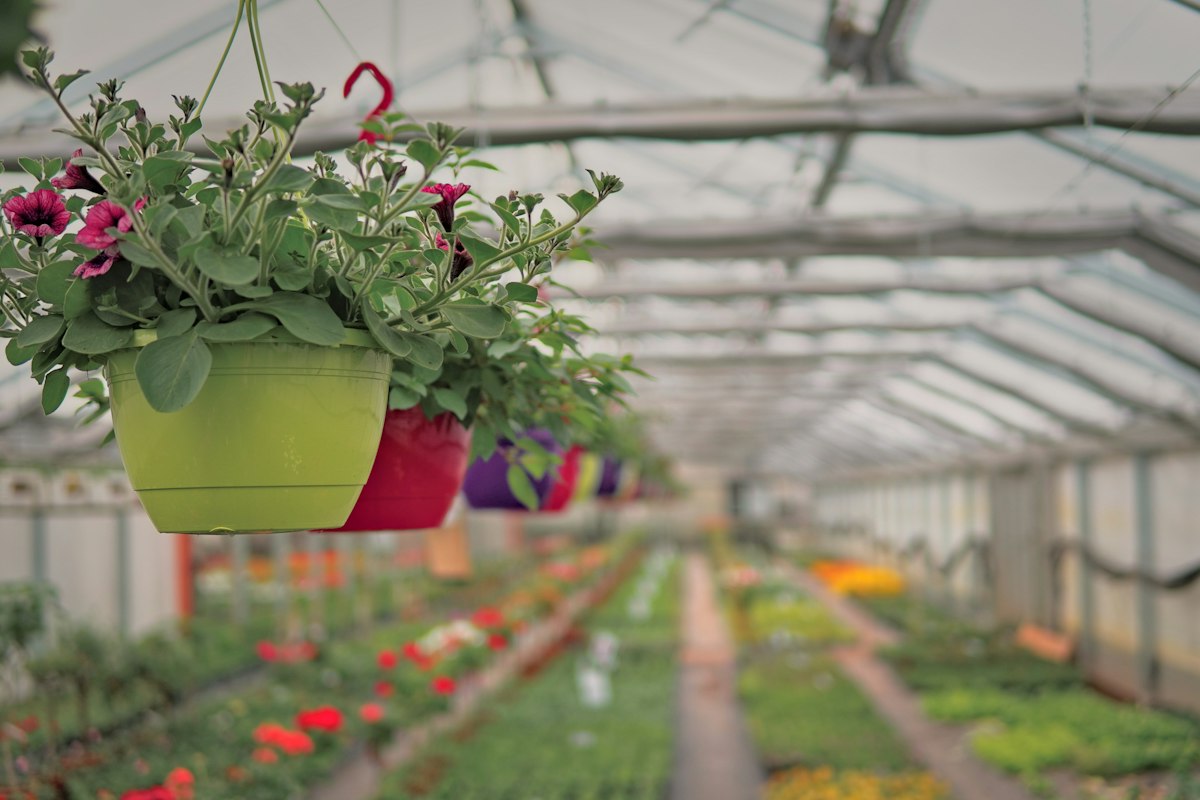
Coir currently represents an estimated 5 to 10 percent of the German substrate mix, but this share is growing rapidly as manufacturers reformulate to meet retailer mandates and government targets. Klasmann-Deilmann, the world's largest substrate company, surpassed 1 million cubic metres of alternative raw materials (including coir, wood fibre and green compost) in 2024.[3] The average EU growing media price at the grower level is approximately EUR 60 per cubic metre.[2]
02 · Peat phase-out and retailer mandates.
The German Federal Ministry of Food and Agriculture (BMEL) published its Torfminderungsstrategie (peat reduction strategy) with two targets: end peat use in hobby gardening by 2026 and in professional horticulture by 2030.[4] However, EU single-market rules prevent a unilateral German ban on peat. The strategy relies on voluntary commitments, retailer mandates and R&D funding rather than legislation.
LIDL: the single most impactful driver
LIDL implemented a 50 percent v/v renewable substrate mandate from 1 January 2024 across its garden product range in Germany. This is the single most impactful commercial driver of peat alternative demand in Europe. LIDL's scale (over 3,200 stores in Germany alone) means its purchasing decisions cascade through the entire substrate supply chain.[5]
Retailer cascade
ALDI is following LIDL within 12 to 18 months with a comparable renewable mandate. REWE/toom is expanding its peat-free range. The DIY chains are also moving: OBI operates approximately 350 stores, Dehner approximately 130, Hornbach approximately 100 and Bauhaus approximately 150 in Germany.[6]
Peat supply constraints
Baltic peat harvest reached only 15 to 25 percent of planned volumes in 2025, a historic shortage not seen since 1998. Wet weather across the Baltic states reduced available harvest windows. This supply squeeze reinforces the commercial case for alternative raw materials including coir, wood fibre and green compost.[7]
The Thuenen Institute found that peat-free growing media are on average 21 percent more expensive than peat-based equivalents at retail. However, this premium is largely margin-driven by manufacturers and retailers, not by raw material cost differences. As production scales and formulations mature, the gap is expected to narrow.[8]
03 · Major substrate manufacturers: the Lower Saxony cluster.
Germany's substrate manufacturing industry is concentrated in a remarkably compact geographic area. Five major manufacturers operate within a 60 km radius in Lower Saxony and North Rhine-Westphalia, all within 150 km of the port of Bremerhaven. This cluster processes the majority of peat and peat alternatives used in German and European horticulture.
| Company | Location | Key facts | Source |
|---|---|---|---|
| Klasmann-Deilmann | Geeste, Lower Saxony | World's largest substrate company. Surpassed 1M m³ of alternative raw materials in 2024. RHP-certified. Operations in 15+ countries. | Annual Report 2024 |
| Stender | Schermbeck, NRW | Full-range substrate manufacturer. Professional and hobby lines. Active in peat-alternative R&D. | Company website |
| Floragard | Oldenburg, Lower Saxony | Major retail brand. Supplies LIDL, ALDI, REWE garden ranges. Reformulating for peat-free mandates. | Company website |
| Gramoflor | Vechta, Lower Saxony | No product without peat substitutes since 2020. Pioneer in peat-reduced formulations. | Company website |
| HAWITA | Vechta, Lower Saxony | 400+ employees. Manages 4,500+ ha of moorland. Professional and hobby substrates. | Company website |
International companies Jiffy (Norway) and Pindstrup (Denmark) also serve the German market from production sites in the region.
04 · Greenhouse clusters and professional demand.
Germany's greenhouse and nursery production is concentrated in several regional clusters, each with distinct crop profiles and substrate requirements.
Lower Saxony
The Oldenburg/Ammerland nursery cluster is one of Europe's largest contiguous nursery regions. Papenburg and Vechta are additional centres. Lower Saxony is also home to the substrate manufacturer cluster, creating tight supply chain integration.[9]
North Rhine-Westphalia
The Straelen/Geldern/Kevelaer area near the Dutch border is a major vegetable greenhouse region. NRW benefits from proximity to the Dutch substrate supply chain and to the large consumer markets of the Ruhr area and Rhineland.[9]
Baden-Wuerttemberg
The Lake Constance region concentrates soft fruit production (strawberries, raspberries) that increasingly uses coir-based grow bags. This region also has strong horticultural research infrastructure.[9]
Bavaria
Weihenstephan (Freising) hosts one of Europe's leading horticultural research centres, with active substrate research programs. Upper Bavaria has a significant nursery cluster.[9]
Schleswig-Holstein
The northernmost state benefits from proximity to Hamburg port, Germany's largest container terminal and the natural entry point for coir imports. Nursery and ornamental production is concentrated near the Elbe estuary.[9]
05 · Logistics from Brazil: 25 to 30 days to Hamburg, no Suez risk.
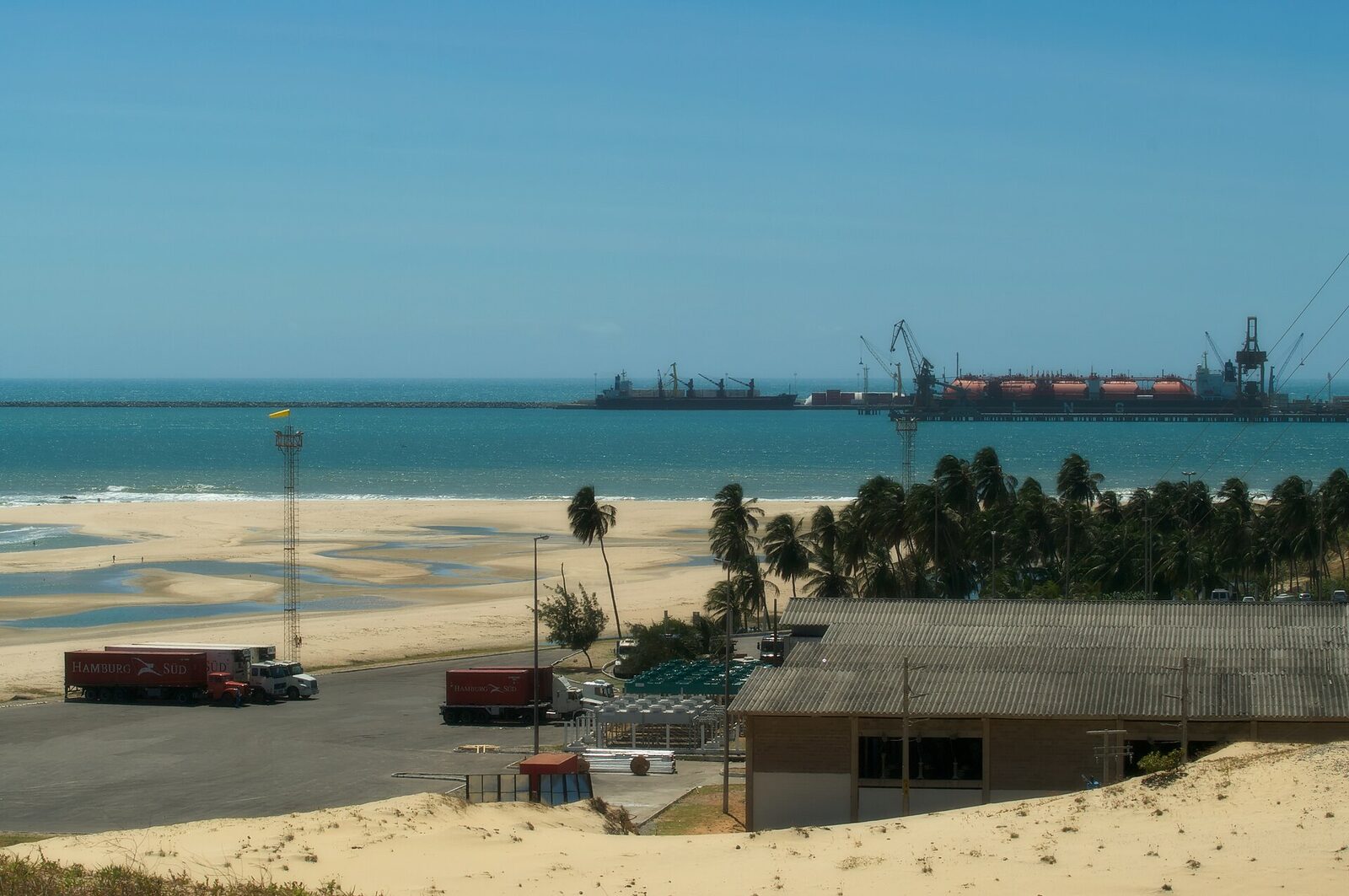
The Port of Pecem in Ceara, Brazil, is 90 km from Carve's processing site in Paraipaba. The Atlantic routing from Northeast Brazil to Northern Europe avoids the Suez Canal and Red Sea entirely, eliminating the geopolitical risk that has disrupted Asia-Europe supply chains since late 2023.
| Route | Transit time | Source |
|---|---|---|
| Pecem to Hamburg | 25–30 days | APM Terminals Pecem |
| Pecem to Bremerhaven | 24–28 days | APM Terminals Pecem |
| Pecem to Rotterdam | 22–26 days | APM Terminals Pecem |
| India to Hamburg (direct) | 25–35 days | Shipping line schedules |
| India to Hamburg (transshipment) | 30–40 days | Shipping line schedules |
Bremerhaven is the closest major container port to the Lower Saxony substrate manufacturer cluster, approximately 150 km.
Import conditions
Coconut coir enters the EU under HS 530500 at 0 percent customs duty. A phytosanitary certificate from MAPA (Brazil's agriculture ministry) is required. Wood packaging must comply with ISPM 15 (heat treatment or methyl bromide). A standard 40HC container holds approximately 24 tonnes of compressed coir, equivalent to approximately 300 cubic metres of end product after expansion.[10]
Red Sea disruption
The Red Sea crisis that began in late 2023 added USD 3,000 to 4,000 per container for Asia-to-Europe routes. Many carriers rerouted via the Cape of Good Hope, adding 10 to 14 days to transit times. The Brazil-to-Europe route is unaffected by this disruption because it crosses the Atlantic directly.[11]
06 · Pricing.
Retail pricing in Germany
| Product type | Price range (EUR/L) | Notes |
|---|---|---|
| Standard peat-based substrate | 0.08–0.15 | Baseline hobby and garden range |
| Peat-free substrate | 0.12–0.30 | ~21% premium over peat-based equivalent |
The Thuenen Institute found the 21 percent premium is largely margin-driven, not raw-material-driven.[8]
Professional pricing
The average EU growing media price at the grower level is approximately EUR 60 per cubic metre. Professional substrates command a range of EUR 40 to 90 per cubic metre depending on formulation, certification level and order volume.[2]
Raw coir import prices
| Parameter | Value | Source |
|---|---|---|
| Raw coir CIF Europe | EUR 0.50–1.50/kg | Industry estimates |
| Indian FOB reference | ~US$ 356/t | Trade data |
| Wood fibre (main competitor, domestic) | Lower cost, domestic production advantage | Industry |
Wood fibre is coir's main competitor in the German market with a domestic production advantage. Coir offers superior water-holding capacity and compression ratio for shipping.
Coir demand projection for Germany
Moderate scenario assumes partial retailer compliance and gradual professional adoption. Aggressive scenario assumes full BMEL target compliance and complete retailer cascade.
07 · Standards and certifications.
The German professional substrate market requires compliance with a specific set of standards. The RAL quality mark is particularly important: without it, a substrate product faces significant barriers to professional acceptance.
| Standard | Scope | Importance |
|---|---|---|
| DIN EN 12580 | Soil improvers and growing media: sampling | Mandatory for market access |
| DIN EN 13037 | Determination of pH | Mandatory for market access |
| DIN EN 13038 | Determination of electrical conductivity | Mandatory for market access |
| DIN EN 13039 | Determination of organic matter content | Mandatory for market access |
| DIN EN 13040 | Sample preparation, dry matter and moisture content | Mandatory for market access |
| DIN EN 13041 | Determination of physical properties (water capacity, air capacity) | Mandatory for market access |
| DIN EN 16086 | Plant response test | Mandatory for market access |
| RAL-GZ 250 | RAL quality mark for growing media | Quasi-mandatory for professional acceptance |
| RHP | Dutch horticulture standard | Significant; Klasmann-Deilmann is RHP-certified |
| IVG guidelines | Industry association standards | Expected for IVG member companies |
Suppliers to German manufacturers should ensure their raw coir meets the analytical requirements defined in DIN EN 13037 through 13041 before shipment.[12]
Carve supplies washed and buffered coir pith and coir fiber from Brazilian dry husk that is not retted. EC reports, physical property data and product specifications are available on the product pages. Husk chips are in development for 2027.
08 · Frequently asked questions.
How big is the German growing media market?
Germany consumes approximately 8 million cubic metres of growing media annually, with a market value estimated at EUR 480 to 560 million. Together with the Netherlands, Germany accounts for roughly 50 percent of European substrate consumption. Peat still makes up 75 to 77 percent of EU growing media. Coir currently represents 5 to 10 percent of the German mix but is growing rapidly. Sources: IVG 2024, Blok 2026.
What is the German peat phase-out timeline?
The BMEL published its peat reduction strategy targeting the end of peat in hobby gardening by 2026 and in professional horticulture by 2030. EU single-market rules prevent a unilateral ban. The strategy relies on voluntary commitments and retailer mandates. LIDL implemented a 50 percent renewable mandate from January 2024. Baltic peat harvest hit only 15 to 25 percent of plan in 2025. Sources: BMEL 2022, Blok 2024a.
Which German companies buy coir?
Major substrate manufacturers include Klasmann-Deilmann (Geeste, world's largest, 1M+ m3 alternative materials), Stender (Schermbeck), Floragard (Oldenburg), Gramoflor (Vechta, no product without peat substitutes since 2020) and HAWITA (Vechta, 400+ employees). All within a 60 km radius in Lower Saxony and NRW. Sources: company websites and annual reports.
What is the transit time from Brazil to Germany?
From Pecem to Hamburg: 25 to 30 days. To Bremerhaven: 24 to 28 days. To Rotterdam: 22 to 26 days. From India to Hamburg: 25 to 35 days direct, 30 to 40 via transshipment. The Brazil route avoids Suez and Red Sea risk entirely. The Red Sea crisis added USD 3 to 4 thousand per container for Asia-Europe routes. Sources: APM Terminals Pecem, shipping line schedules.
What certifications do German substrate buyers require?
DIN EN standards (12580, 13037, 13038, 13039, 13040, 13041, 16086) are mandatory for market access. The RAL quality mark (RAL-GZ 250) is quasi-mandatory for professional acceptance. RHP certification is significant because major manufacturers like Klasmann-Deilmann are RHP-certified. IVG guidelines also apply. Sources: DIN standards, RAL Institute, RHP Foundation.
How much coir will Germany need by 2030?
Current consumption is estimated at 0.4 to 0.8 million cubic metres. Under a moderate peat phase-out scenario, demand is projected at 1.2 to 2.0 million cubic metres by 2030. Under an aggressive scenario (full retailer compliance and professional adoption), demand could reach 2.0 to 3.0 million cubic metres. Sources: industry estimates based on IVG volumes and BMEL targets.
MARKET INTELLIGENCE BY REGION
Coir markets we cover
Sourced market data and import guides for the destinations we serve from Pecém, Brazil.
For the worldwide picture, see our Global Coir Market overview.
09 · Sources.
- IVG Industrieverband Garten e.V., Growing Media Statistics, 2024 — industry association data on German substrate market volumes.
- Blok, C. et al., Analytical methods for peat and growing media analysis, Wageningen University and Research, 2026 — EU growing media composition and pricing data.
- Klasmann-Deilmann, Annual Report 2024 — klasmann-deilmann.com.
- BMEL (Bundesministerium fuer Ernaehrung und Landwirtschaft), Torfminderungsstrategie, 2022 — German federal peat reduction strategy.
- Blok, C., "Peat alternatives and retailer mandates in the EU growing media market," presentation at International Substrate Symposium, 2024a.
- Company websites and annual reports: ALDI, REWE/toom, OBI, Dehner, Hornbach, Bauhaus — retailer store counts and sustainability commitments.
- European Peat and Growing Media Association (EPAGMA), Baltic peat harvest reports, 2025 — harvest volume shortfalls.
- Thuenen Institute (Johann Heinrich von Thuenen-Institut), Analysis of peat-free growing media pricing, 2024 — thuenen.de.
- German federal and state horticultural statistics; Landwirtschaftskammer Niedersachsen — greenhouse and nursery cluster data.
- EU customs tariff, HS code 530500 — coconut coir fibre, 0% duty; MAPA (Brazil), phytosanitary certificate requirements; ISPM 15 wood packaging standard.
- Drewry Shipping Consultants, Red Sea crisis impact on container shipping, 2024–2025; APM Terminals Pecem, shipping lines and transit times — apmterminals.com.
- DIN EN standards 12580, 13037, 13038, 13039, 13040, 13041, 16086 — Deutsches Institut fuer Normung; RAL-GZ 250 quality mark — RAL Deutsches Institut fuer Guetesicherung; RHP Foundation — rhp.nl.
- Floragard Vertriebs-GmbH, company profile and product range — floragard.de.
- Stender AG, company profile — stender.de.
- Gramoflor GmbH & Co. KG, company profile and sustainability — gramoflor.de.
- HAWITA Gruppe GmbH, company profile — hawita-gruppe.de.
- Jiffy Group, German market operations — jiffygroup.com; Pindstrup Mosebrug A/S — pindstrup.com.
- European Commission, EU single market regulation on fertilising products (Regulation 2019/1009) — growing media CE marking framework.
- Government of Ceara, Pecem port throughput records, 2025 — 706,509 TEU, +27% year on year.
- IndexBox, Coir-Based Growing Mixes Market Outlook — indexbox.io.
- LIDL Deutschland, sustainability report and garden product sourcing guidelines, 2024.
- Industry estimates based on IVG volumes, BMEL targets, and manufacturer capacity announcements — coir demand projections for Germany.