01 · Market overview: CAD 5.5 billion greenhouse industry.
Canada's greenhouse fruit and vegetable sector reached CAD 2.7 billion in 2024, with the total greenhouse industry (including floriculture, nursery and sod) valued at CAD 5.5 billion in 2025.[1] Total greenhouse area in Canada is 33.3 million m² (8,230 acres), with 23.4 million m² dedicated to fruit and vegetable production across 920 operations.[2]
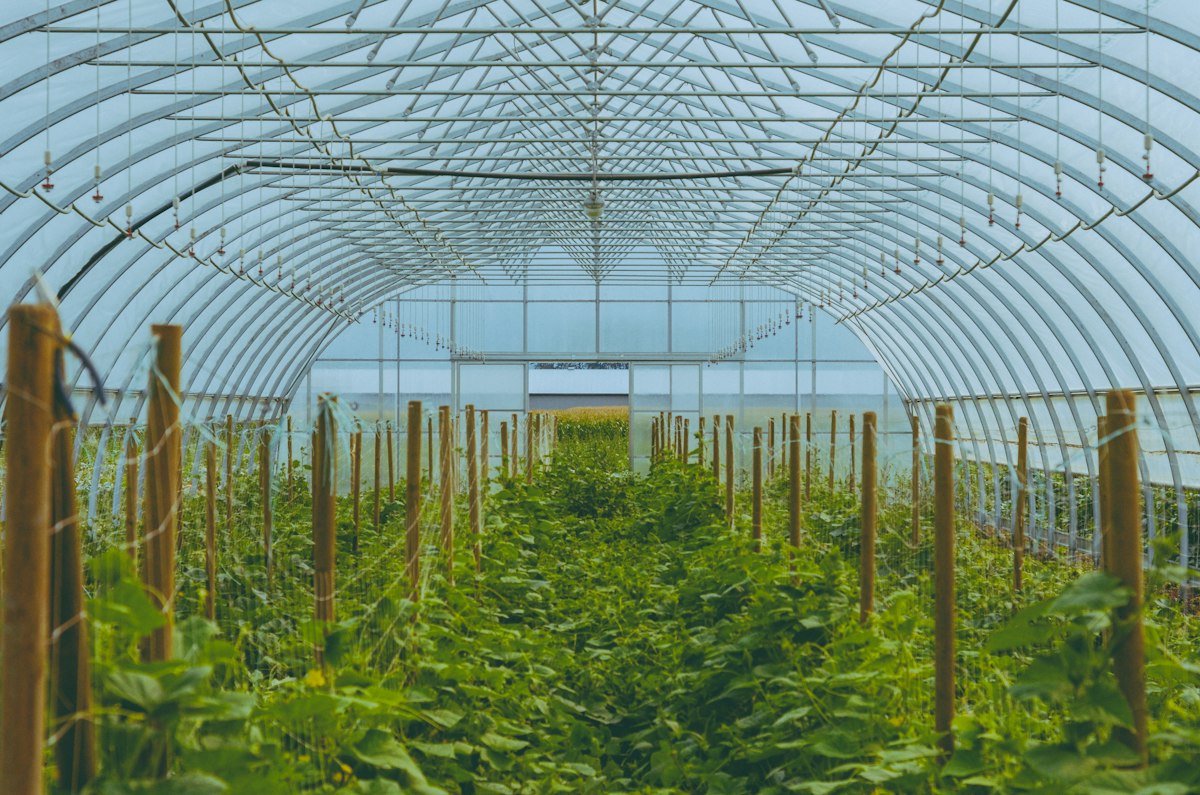
The crop mix in Canadian greenhouse vegetables is relatively concentrated: tomatoes 31.6 %, peppers 30.3 % and cucumbers 29.6 % of greenhouse vegetable area.[2] Provincial distribution is dominated by Ontario at 63.9 % of greenhouse fruit and vegetable area, followed by British Columbia at 18.5 % and Quebec at 10.7 %.[1]
Coir adoption drivers
The North America coir market is growing at a CAGR of 6.9 %.[3] Coir adoption is accelerating as Canadian growers move away from rockwool (disposal concerns and landfill restrictions in Ontario) and peat (environmental pressure and voluntary sustainability commitments by major retailers). Coir prices increased 60 to 70 % compared to January 2024, creating supply-chain interest in alternative origins closer to market.[4]
02 · The Leamington-Ontario cluster: North America's greenhouse capital.
The Leamington-Kingsville corridor in Essex County, Ontario, concentrates approximately 2,000 acres of greenhouse production, making it the largest greenhouse cluster in North America. The Ontario Greenhouse Vegetable Growers (OGVG) represents 170+ members farming over 4,500 acres province-wide.[6]
Major growers
| Operation | Scale | Notes | Source |
|---|---|---|---|
| Mastronardi / SUNSET | 91 acres added recently | One of North America's largest greenhouse vegetable marketers; Leamington HQ | HortiDaily |
| NatureFresh Farms | 160 acres, 2,500+ total | Multi-site; expanding in Ohio and Ontario | Greenhouse Grower |
| Mucci Farms | 150+ acres | 36-acre indoor strawberry facility; Kingsville | HortiDaily |
| Orangeline Farms | Mid-scale | Leamington; tomatoes and peppers on coir substrate | OGVG |
Substrate demand estimate
At 30 to 50 % coir adoption across Ontario's greenhouse vegetable area, estimated coir substrate demand in the province is 29,000 to 48,500 m³ per year. The Leamington cluster alone, at 2,000 acres, would consume 12,000 to 20,000 m³ per year of coir at those adoption rates.[7]
03 · British Columbia and cannabis: the western cluster.
BC greenhouse vegetables
British Columbia's greenhouse vegetable sector covers approximately 1,530 acres, concentrated in the Fraser Valley east of Vancouver. Major operations include Windset Farms (298 acres) and Village Farms International, which has converted portions of its BC greenhouse capacity to cannabis production.[8]
Cannabis sector
Canada's legal cannabis sector has approximately 1.4 million m² of indoor cultivation area across licensed producers. An estimated 40 to 60 % of indoor cannabis is grown on coir substrate.[9] Major licensed producers using greenhouse or indoor facilities include:
| Licensed producer | Facility | Scale | Source |
|---|---|---|---|
| Tilray / Aphria | Leamington, ON | 2.4 M ft² | Health Canada |
| Pure Sunfarms | Delta, BC | 2.2 M ft² | Health Canada |
| Aurora Cannabis | Multiple | Large-scale | Health Canada |
| HEXO / Tilray | Gatineau, QC | Large-scale | Health Canada |
Cannabis coir specifications
| Parameter | Cannabis specification | Source |
|---|---|---|
| Raw substrate EC | < 0.5 mS/cm (ideally < 0.3) | Industry standard |
| pH range | 5.5–6.5 | Industry standard |
| Processing | Triple-washed, Ca-buffered | Industry standard |
| Certification | RHP preferred | Major LPs |
| Pith:chip ratio | 70:30 typical | Industry standard |
04 · Existing coir suppliers: few warehouse in Canada.
Three companies currently maintain warehouse operations in Canada for coir products. The majority of coir arrives through international suppliers who ship directly to greenhouse operations or distribute through horticultural supply chains.
| Supplier | Location | Type | Source |
|---|---|---|---|
| Avee Cocoseller | Cambridge, ON | Canadian warehouse, imports from Sri Lanka / India | Company data |
| CoirN'Grow | Breslau, ON | Canadian warehouse, imports from India | Company data |
| Cocopeat Canada | Calgary, AB | Canadian warehouse, Western Canada distribution | Company data |
| Jiffy Products | International | Global brand, ships to Canada; propagation and substrate | Industry |
| RIOCOCO | International | Professional substrate; sells into Canadian greenhouse sector | Industry |
| Dutch Plantin | International | Premium professional substrate; RHP-certified | Industry |
| Pelemix | International | Grow bags and slabs; Israeli manufacturer | Industry |
| Premier Tech | Rivière-du-Loup, QC | Canadian peat company; blends coir into professional lines | Company data |
The limited number of Canadian-based coir warehouses creates an opportunity for a new supplier with shorter transit times and local inventory.
05 · Logistics from Brazil: 12 to 16 days to Halifax.
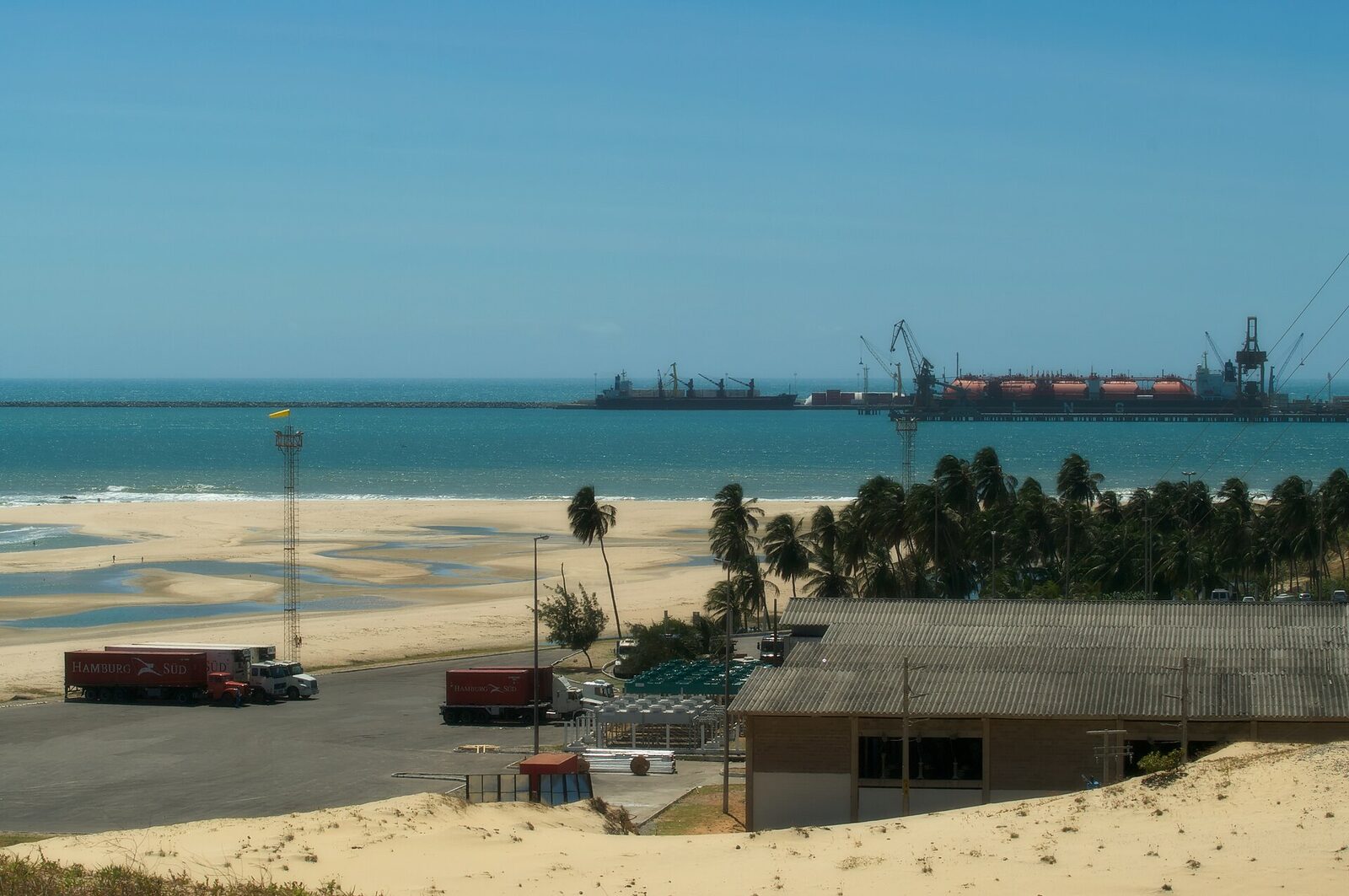
The Port of Pecem in Ceara, Brazil, is 90 km from Carve's processing site in Paraipaba. The geographic position of Northeast Brazil on the Atlantic places it closer to Eastern Canada than any Asian coir origin. A 40HC container holds approximately 24 tonnes of compressed coir.
| Route | Transit time | Distance to Leamington | Source |
|---|---|---|---|
| Pecem to Halifax | 12–16 days | ~1,400 km by road | APM Terminals Pecem |
| Pecem to Montreal | 14–18 days | ~900 km by road | APM Terminals Pecem |
| India / Sri Lanka to Halifax | 28–35 days | ~1,400 km by road | Industry standard |
Counter-seasonal advantage
Brazil's coconut harvest peaks from September to January. Coir processed and shipped during this period arrives in Canada between November and March, well-timed for the spring planting season that begins in February to April. Canadian growers typically place substrate orders 2 to 4 months before planting.[10]
CFIA import requirements
The Canadian Food Inspection Agency (CFIA) regulates imports of growing media under Directive D-96-20, which lists ground coconut husk (coir) as an approved growing medium. A phytosanitary certificate from the exporting country's NPPO (Brazil: MAPA) is required. The product must be free from soil, plant pests and weed seeds. No heat treatment is required for processed coir pith, fiber or chips that meet the directive's conditions.[11]
06 · Pricing: wholesale and retail.
Supply chain pricing
| Product | Price | Source |
|---|---|---|
| Grow bags, FOB India | US$ 0.80–2.30 | Industry |
| Grow bags, wholesale to Canadian grower | CA$ 3.50–6.00 | Industry |
| 5 kg compressed block, retail | CA$ 15–25 | Canadian retailers |
| 650 g consumer bricks (5-pack) | CA$ 18–28 | Amazon.ca |
Coir vs rockwool vs peat
| Substrate | Approx. cost per m³ | Lifespan | Disposal | Source |
|---|---|---|---|---|
| Coir (slabs / bags) | CA$ 80–160 | 2–3 crop cycles | Compostable; soil amendment | Industry |
| Rockwool (slabs) | CA$ 100–200 | 1–2 crop cycles | Landfill (disposal restrictions in ON) | Industry |
| Peat moss (bales) | CA$ 60–120 | 1–2 seasons | Compostable; environmental pressure on sourcing | Industry |
Prices are approximate and vary by supplier, volume and specifications. Coir prices increased 60 to 70 % compared to January 2024.[4]
07 · Specifications and certifications expected by Canadian buyers.
Canadian professional buyers specify quality parameters similar to the US market, with additional emphasis on RHP certification and per-batch documentation for major greenhouse operations.
| Parameter | Professional target | Cannabis target |
|---|---|---|
| EC (1:5 extract) | < 0.5 mS/cm | < 0.3 mS/cm |
| pH | 5.5–6.8 | 5.5–6.5 |
| Calcium buffering | Required | Required |
| RHP certification | Preferred by major growers | Preferred |
| Air-filled porosity (AFP) | 15–30 % | 20–30 % |
| Washing | Double-washed minimum | Triple-washed |
| Per-batch lab documentation | Required | Required |
| Contamination | No pathogens, weed seeds, heavy metals | Same |
CFIA Directive D-96-20 lists ground coconut husk as an approved growing medium for import into Canada. A phytosanitary certificate from MAPA (Brazil) is required.[11]
Carve supplies all three grades — Natural, Washed and Buffered — from Brazilian dry husk that is not retted. Specifications, EC reports and product details are on the coir pith, coir fiber and husk chips pages.
08 · Frequently asked questions.
How big is the Canadian greenhouse market?
Canada's total greenhouse industry reached CAD 5.5 billion in sales in 2025. The greenhouse fruit and vegetable segment alone was valued at CAD 2.7 billion in 2024 across 920 operations and 23.4 million square metres of production area. Ontario accounts for 63.9 percent of greenhouse fruit and vegetable area. Sources: Statistics Canada, HortiDaily.
How much coir does Canada use?
Canada does not publish separate coir import statistics. Estimated coir substrate demand in Ontario alone is 29,000 to 48,500 cubic metres per year at 30 to 50 percent adoption. The cannabis sector adds an estimated 14,000 to 21,000 cubic metres per year. Three companies warehouse coir in Canada: Avee Cocoseller, CoirN'Grow and Cocopeat Canada. Sources: industry estimates, company data.
What is the transit time from Brazil to Canada?
From Pecem, Brazil, to Halifax the transit is 12 to 16 days. To Montreal, 14 to 18 days. From India to Halifax: 28 to 35 days. Brazil ships counter-seasonally from September to January, arriving for Canada's spring planting season February to April. Source: APM Terminals Pecem.
Which Canadian industries use coir?
The three largest segments are greenhouse vegetable production (tomatoes, peppers, cucumbers in Ontario's Leamington cluster and BC's Fraser Valley), cannabis cultivation (1.4 million square metres of indoor area, 40 to 60 percent on coir) and nursery and floriculture. Sources: Statistics Canada, Health Canada.
What certifications do Canadian buyers require?
Professional buyers require EC below 0.5 mS/cm (below 0.3 for cannabis), pH 5.5 to 6.8, calcium buffering and per-batch lab documentation. RHP certification is preferred by major greenhouse operations. CFIA Directive D-96-20 lists ground coconut husk as an approved growing medium for import. Sources: CFIA, industry.
What are Canadian wholesale prices for coir?
Grow bags FOB India range from USD 0.80 to 2.30. Wholesale to Canadian growers: CAD 3.50 to 6.00 per grow bag. Retail 5 kg blocks sell for CAD 15 to 25. Prices increased 60 to 70 percent compared to January 2024, creating opportunity for closer suppliers. Sources: industry pricing, Greenhouse Grower.
MARKET INTELLIGENCE BY REGION
Coir markets we cover
Sourced market data and import guides for the destinations we serve from Pecém, Brazil.
For the worldwide picture, see our Global Coir Market overview.
09 · Sources.
- Statistics Canada, Greenhouse, Sod and Nursery Industries, 2024–2025 — statcan.gc.ca.
- Statistics Canada / HortiDaily, Greenhouse fruit and vegetable area and operations, 2024 — hortidaily.com.
- Mordor Intelligence, North America Coir Market, 2025 — mordorintelligence.com.
- Greenhouse Grower, "The Growing Media Market: Tariffs, Trends, and What Lies Ahead" — greenhousegrower.com.
- Premier Tech Growers and Consumers, professional substrate lines — pthorticulture.com.
- Ontario Greenhouse Vegetable Growers (OGVG) — ogvg.com.
- Industry estimates based on Statistics Canada area data and sector adoption surveys; Floral Daily, North American coir demand — floraldaily.com.
- HortiDaily, BC greenhouse sector; Windset Farms, Village Farms International — hortidaily.com.
- Health Canada, Cannabis Licensed Producers — canada.ca.
- APM Terminals Pecem, shipping lines and transit times — apmterminals.com.
- CFIA, Directive D-96-20: Policy on the importation and domestic movement of soil and soil-related matter — inspection.canada.ca.
- NatureFresh Farms, company data — naturefresh.ca.
- HortiDaily, Mastronardi / SUNSET greenhouse expansion — hortidaily.com.
- HortiDaily, Mucci Farms indoor strawberry facility — hortidaily.com.
- Government of Ceara, Port of Pecem TEU record 2025 — ceara.gov.br.
- Avee Cocoseller, CoirN'Grow, Cocopeat Canada — company websites and industry directories.
- Tilray Brands, Pure Sunfarms, Aurora Cannabis — public filings and Health Canada licensing data.
- IndexBox, Coir-Based Growing Mixes market projections — indexbox.io.
- iContainers, Brazil to Canada shipping — icontainers.com.
- HORIBA, pH and Conductivity in Coconut Coir — horiba.com.